

Virtual data rooms for NZ property syndication
A property syndication data room is a secure, access-controlled website where a syndicator publishes one confidential offer pack and a large group of investors, advisers, lenders and oversight parties each read only what their role permits, with every view logged. That single sentence hides the thing that makes syndication different from almost every other deal a data room is built for. A trade sale has three bidders in a quiet room. A retail property syndicate has a crowd, often more than a hundred investors plus their accountants and lawyers, all opening the same documents in the same three or four weeks. The tool has to survive that load, and the permission model, not the feature list, is what decides whether it does.
Why the read-many shape changes everything
The defining fact of a syndication is that many people read the same pack at once, and that inverts the priorities you would bring to an ordinary sale room. In a trade sale you guard a handful of bidders and worry mostly about leaks to a competitor. In a syndicate you are managing scale: dozens or hundreds of individually identified investors, each needing controlled read-only access, each generating questions, each leaving a footprint you may later have to prove. Feature checklists sell enterprise platforms, but for a syndicated offer the quiet fundamentals decide the outcome. Can you invite a hundred and forty people in one action and still track each one individually? Does replacing a file mean everyone sees the new version, or that you now have a hundred and forty stale copies loose in the world?
Set that test against the three tools most syndicators actually reach for and the field narrows fast. Emailing the pack collapses the moment a document changes, because a live offer changes constantly; a valuation gets peer reviewed, a tenant signs a rent review, a lawyer flags a clause, and every one of those events leaves outdated attachments you cannot recall. A shared cloud folder solves versioning but nothing else, offering no per-investor control, no audit trail and no way to keep the investor register away from the crowd. Only the purpose-built room passes on every line that a regulated, read-many offer genuinely tests, which is the whole argument of the matrix below.
| Under real syndication load | Virtual data room | Emailed offer pack | Shared cloud folder |
|---|---|---|---|
| Per-investor read-only permissions | ✓ | ✗ | ✗ |
| Full audit trail of views and downloads | ✓ | ✗ | ✗ |
| One version everyone sees when a file changes | ✓ | ✗ | ✓ |
| Bulk invite tracked per investor | ✓ | ✗ | ✗ |
| Dynamic watermark carrying the viewer's identity | ✓ | ✗ | ✗ |
| Structured Q&A that survives a hundred questions | ✓ | ✗ | ✗ |
| Investor register kept away from the crowd | ✓ | ✗ | ✗ |
| Evidence trail for a regulated offer | ✓ | ✗ | ✗ |
The pattern is stark, and it explains why the feature debate matters less than syndicators expect. The essentials all cluster around control and evidence rather than flashiness: per-investor read-only permissions, a full audit trail, bulk invite with grouping, dynamic watermarking that carries each viewer’s identity onto every page, structured Q&A so a hundred questions do not become a hundred email threads, and version control that replaces stale files rather than stacking them. Everything else is optional polish worth paying for only when the asset or the audience calls for it, such as disabling download on the most sensitive files, hosting a site walkthrough video in the room, or standing up a custom-branded investor portal.
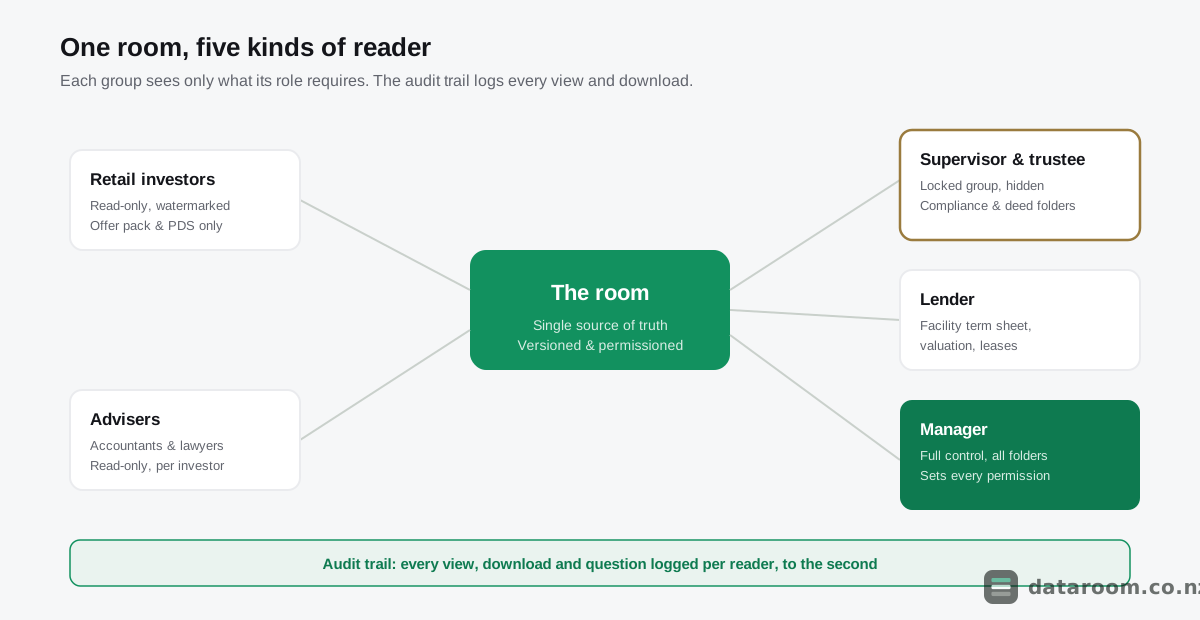
Watermarking earns its place for a reason that is easy to underrate until something leaks. When every page an investor opens carries their own name, email and a timestamp, a leaked valuation or a screenshot of the tenancy schedule can be traced straight back to the reader who let it out, which changes behaviour before the fact rather than only assigning blame after it. The same logic runs through the permission model: the reason a purpose-built room beats a clever folder-sharing setup is not that it has more buttons, but that it treats each of a hundred and forty readers as a separately controlled, separately audited party. That is precisely the capability email and a shared drive cannot fake, however cheap they look on day one. If the category itself is new to you, our plain-English explainers on what a virtual data room is and how a virtual data room works cover the mechanics before you commit, and running data room Q&A without losing control is worth reading before an offer that will generate questions fast.
What belongs in the investor pack, and what New Zealand scrutinises first
The syndication pack is heavier than a plain commercial sale, because you are disclosing two things at once: the property being bought and the investment structure wrapped around it. Build it as folders rather than a pile, because investors navigate by structure, and a well-ordered room lets an adviser find the seismic report without emailing you to ask. A working inventory for a single-asset New Zealand offer runs to seven folders. The property folder holds the computer register (title), the LIM, the most recent registered valuation and the sale and purchase agreement, which together confirm what is being bought and at what price. The buildings and structure folder carries the seismic assessment, the building warrant of fitness and the engineer and services reports. The tenancy folder holds the lease documents, the tenancy schedule, the rent roll and the arrears and incentive summary, which drive the forecast income and, more importantly, its durability.
The remaining four folders describe the investment itself. The investment-structure folder holds the trust deed, the statement of investment policy and objectives (SIPO) and the constitution, which between them define investor rights, fees and governance. The offer folder carries the Product Disclosure Statement for a retail offer, or the wholesale offer documents, plus the application form, and these are the legal terms of the investment. The financials folder holds the forecast cash flow, the sensitivity model, the bank facility term sheet and the fee schedule, which let an investor test the forecast return and the gearing. The governance and compliance folder holds the manager and licence details, related-party disclosures and insurance certificates, which show who runs the scheme and on what terms. Order them consistently and the room starts doing quiet work for you: a supervisor or a careful investor can self-serve, and the questions that do arrive are sharper.
New Zealand property syndication follows a recognisable rhythm, and the room should mirror it rather than fight it. A single-asset retail offer usually sets a minimum subscription, commonly $50,000, opens for a defined window of a few weeks, and then either fills or runs to a scale-back if it is oversubscribed, which is a good outcome that still has to be handled fairly and recorded. The sector matters too, because syndicators cluster around a handful of asset types and each shifts which folder gets the hardest scrutiny. Large-format retail and neighbourhood centres turn on tenant covenant and WALT; industrial and logistics sheds invite questions about the ground, contamination history and yard capacity; childcare centres and medical suites bring occupancy licences, operator strength and regulatory standing to the front; and older CBD office or mixed-use stock puts the seismic assessment under the brightest light of all. Structuring the pack so the folder a given audience cares about is obvious, current and complete is half the work of a smooth offer.
Two folders deserve emphasis in a New Zealand context, because they are where local investors and their advisers look first. Seismic performance, expressed as a percentage of New Building Standard (%NBS), is the single biggest risk line for New Zealand commercial property, and it is the number an experienced adviser scrutinises before the yield; keep the assessment high in the folder structure and clearly dated, because a stale or buried seismic report reads as evasive. The tenancy schedule, not the headline yield, is what a careful investor actually underwrites, and the numbers that matter are the weighted average lease term (WALT) and the covenant strength of each tenant, since a low-sixes cash return resting on a twelve-year lease to a national anchor is a very different proposition from the same yield resting on a two-year lease to a single local operator. For a fuller, deal-type view of the pack, our checklist of what documents go in a data room sits alongside a ready-made data room folder structure template, and our roundup of ten data room mistakes that slow NZ deals shows how quickly an ad hoc pack unravels once real investors arrive.
What a syndication room costs in New Zealand dollars
Because a syndicate is read-many, the pricing model matters far more than the brand on the login page. A per-user plan that looks cheap for three logins becomes punishing the moment you invite a hundred and forty investors plus their advisers, whereas a flat per-room or pooled-guest plan caps that exposure regardless of how many people read. Two levers then move the number within a plan: storage, if the pack carries video walkthroughs or drone footage of the asset, and named seats, if the vendor meters external users individually rather than pooling them. Everything below is indicative NZD and GST-exclusive, and you should always confirm the current quote with the provider, because published pricing tiers shift and many vendors bill offshore in USD.
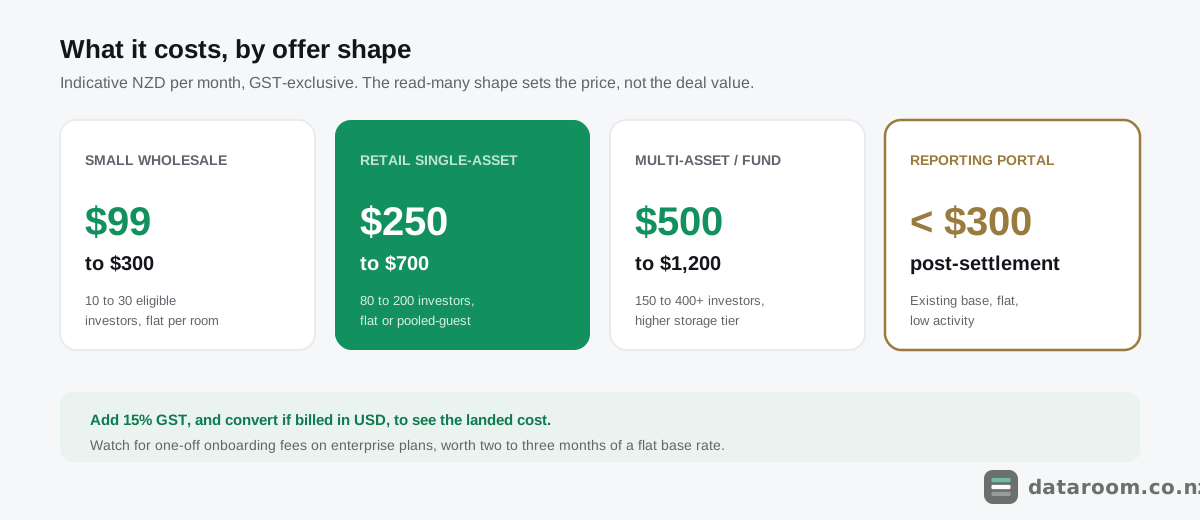
| Offer scenario | Typical investors | Charging model that fits | Sensible monthly spend |
|---|---|---|---|
| Wholesale offer, single small asset (say a Palmerston North large-format retail unit) | 10 to 30 eligible investors | Flat per room | $99 to $300 |
| Retail single-asset syndicate (a Tauranga large-format centre) | 80 to 200 investors | Flat or pooled-guest | $250 to $700 |
| Multi-asset or fund offer (a diversified industrial portfolio) | 150 to 400+ investors | Flat, higher storage tier | $500 to $1,200 |
| Ongoing investor portal, post-settlement | Existing investor base | Flat, low activity | $99 to $300 |
A concrete case shows how the read-many shape, not the deal value, sets the price. An Auckland syndicator has a large-format retail centre in Tauranga under contract at about $28 million, and the plan is ordinary for the sector: raise the equity from roughly a hundred and forty retail investors at a $50,000 minimum, gear the rest with a bank facility, and forecast a pre-tax cash return in the low sixes, with twelve years of lease term across three anchor tenants and a Product Disclosure Statement heading for the Disclose Register. That offer sits squarely in the $250 to $700 band, not because the asset is worth $28 million, but because a hundred and forty readers need controlled, audited access at the same time. Compare a second, smaller shape: a South Island syndicator puts a single Christchurch logistics shed to a wholesale-only group of eight high-net-worth investors and two family trusts, a $12 million asset on one long lease to a national grocery distributor, with a thinner pack and no PDS. Fewer readers and a lighter pack mean that offer runs comfortably on a flat per-room plan at the $99 to $300 end, and it may only need the room live for a matter of weeks before it closes.
Three cost lines are easy to forget when you scope the plan, and each can quietly reshape the budget. GST is the first, since most published prices are GST-exclusive and many providers bill offshore in USD, so add fifteen percent and convert to NZD to see the landed cost. The reporting tail is the second, because the room should stay open at a low-activity rate for years after settlement rather than only for the offer window, and a dormant reporting room usually sits under NZD $300 a month. Onboarding is the third, since enterprise platforms sometimes add a one-off setup fee that can rival two or three months of a flat plan’s base rate. For wider context, our guide to virtual data room pricing in New Zealand breaks down the four charging models and the GST question, and cheapest virtual data rooms for NZ small deals covers the value end for a modest wholesale raise.
It helps to know which charging model a provider is really offering, because the label on the plan and the way it bills can diverge. Per-user pricing charges by the login, which suits a three-person trade sale and quietly penalises a syndicate; pooled-guest pricing lets you invite a defined number of external readers into a shared allowance, which fits a crowd far better; flat per-room pricing charges for the room itself regardless of how many people read, which is the most predictable for a single-asset raise; and per-page or per-storage pricing, still seen on some enterprise platforms, rewards a lean pack and punishes video-heavy ones. For a syndication the honest question to put to any vendor is simple: what happens to this monthly figure when I invite a hundred and forty investors and forty advisers next week? If the answer is nothing, you are on the right model; if the number climbs with every guest, keep looking or negotiate a cap before you sign.
Compare data rooms for a syndicated offer
See indicative NZD pricing, charging models and investor-friendly permission features side by side.
The rules that shape the room: the FMCA, the FMA and the Privacy Act 2020
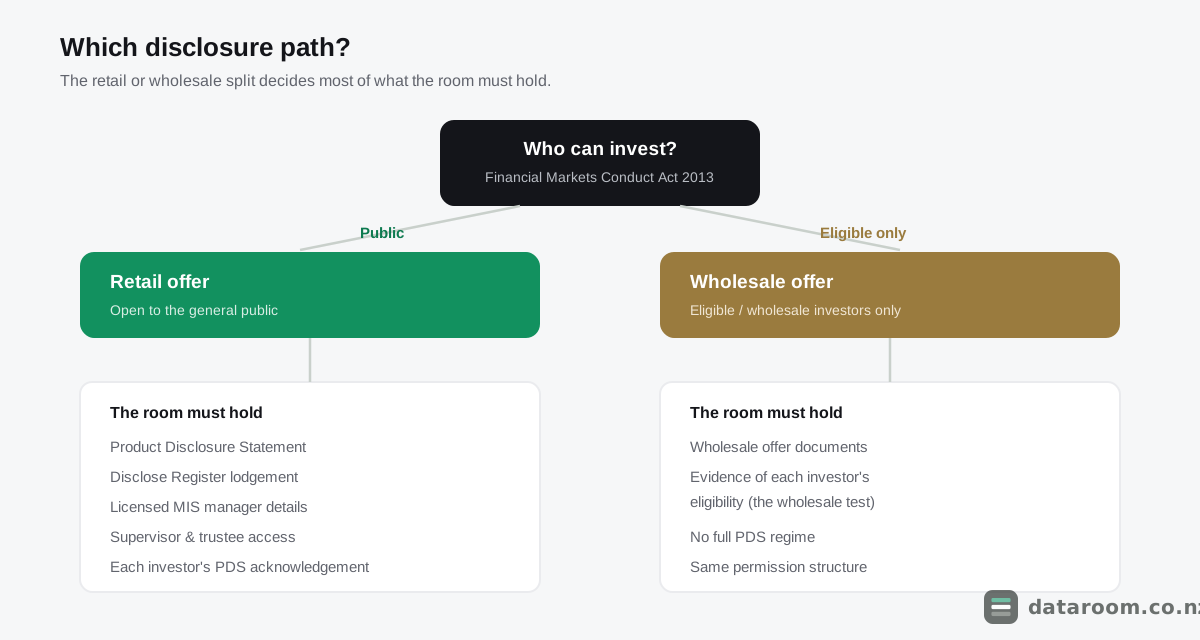
A syndicated property offer is an offer of financial products, which places it inside the Financial Markets Conduct Act 2013, administered by the Financial Markets Authority, and the room does not replace those legal obligations so much as it is where you meet and evidence them. The pivotal distinction is retail versus wholesale, and it decides most of what the room must hold. A retail offer to the general public generally requires a Product Disclosure Statement, lodgement of key information on the Disclose Register, and a manager holding a managed investment scheme manager licence, so the room holds the PDS and each investor’s timestamped acknowledgement. A wholesale offer, made only to eligible or wholesale investors as defined in the Act, is exempt from the full PDS regime, but it still demands that you verify and record each investor’s eligibility, which is exactly the evidence the room is there to keep.
Fair-dealing duties run through everything the room presents. The pack must offer balanced, current information rather than a curated highlight reel that buries the seismic caveat three folders deep, and if a material fact changes mid-offer, version control lets you update the pack while the audit trail proves every investor could see the change. Three practical points follow from that. Advertising must align with the documents, so any teaser, webinar or advertisement should point back to the source-of-truth pack in the room rather than overstating what the offer documents actually say. Financial statements prepared to recognised standards, along with any interim updates, live in the room for investors and the supervisor. And related-party transparency belongs in the governance folder, so fees paid to the manager or its associates, and any related-party purchase, are disclosed rather than discovered.
A syndication is a read-many event, not a read-few one. The tool that suits three bidders in an M&A room is the wrong shape for a hundred and forty investors reading in parallel.
A retail syndication is also rarely a two-party affair between the manager and the crowd, and two oversight parties need to read the room without ever sitting in the general investor group. The licensed independent supervisor holds the scheme property and watches the manager on investors’ behalf, so give them a standing, permissioned view of the offer pack, the trust deed, the SIPO and, in particular, the compliance and related-party folders, because that is the material their oversight role turns on. The trustee, since the syndicate almost always sits inside a trust, reads the room from a locked group the crowd cannot see and cannot know exists. In the Tauranga offer the supervisor was reading the seismic assessment and the bank facility term sheet in the same week the manager opened the room to the first tranche of investors, and the audit trail then did double duty, evidencing disclosure to investors and showing the supervisor was given timely access to what they were entitled to see. Model these parties as their own groups from the start; a supervisor added in a hurry, with the wrong folders visible, is both an access-control mistake and a poor first impression on the party whose sign-off you need.
The Privacy Act 2020 sits alongside the FMCA and bites the moment you collect an application form, because you then hold personal information: names, addresses, IRD numbers, bank accounts and, for wholesale offers, evidence of an investor’s financial position. Three information privacy principles bite hardest. Storage and security (principle 5) requires reasonable safeguards against loss and misuse, which per-investor permissions, encryption and an audit trail supply directly. Use and disclosure (principles 10 and 11) mean an investor’s data must never leak into a folder another investor can open, so the application register and subscription list stay out of the crowd’s reach. Cross-border disclosure (principle 12) matters because many providers host offshore, so know where investor data physically sits and whether comparable protections apply before you disclose it there; if information is exposed and serious harm is likely, the notifiable breach regime obliges you to tell the affected people and the Privacy Commissioner. Authoritative starting points sit at the government’s financial reporting and market obligations overview, the Financial Markets Conduct Act 2013 on the legislation site, the Office of the Privacy Commissioner for plain-English privacy guidance, and CERT NZ’s practical security advice for businesses. None of this is legal advice; run the structure past a licensed adviser. Our deeper piece on your Privacy Act 2020 obligations in a deal and our guide to virtual data room security for a New Zealand deal go further on the controls to demand.
Building and running the room, from empty shell to closed offer
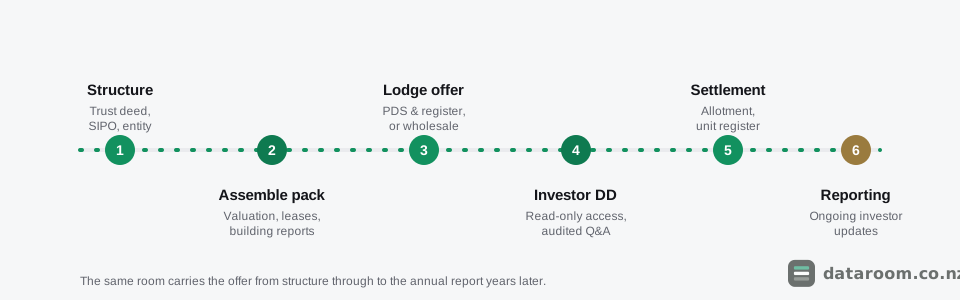
Structure the room before you invite a single investor, so the day the offer opens is a switch rather than a scramble. The discipline is simple: build and permission the room while the pack is still being finalised, get the folders and groups right once, and stage the release so nothing goes live before it should. The sequence below takes the Tauranga offer from an empty room to a live, defensible one, and it generalises to any single-asset raise, running in parallel with the six-stage lifecycle the figure sketches, from structuring the entity through to the annual report years later.
From empty room to live offer in six steps
Build and permission the room while the pack is still being finalised, so the day the offer opens is a switch, not a scramble.
- 1
Build the folder structure first
Create the folders before the files: property, buildings and structure, tenancy, investment structure, the offer, financials, governance. Investors navigate by structure, so get it right once.
- 2
Load and version the pack
Bulk upload the documents into their folders, then set version control so a peer-reviewed valuation or a new rent review replaces the old file rather than sitting beside it.
- 3
Define investor groups and permissions
Create a read-only investor group, an adviser group, and a locked internal group for the manager, trustee and supervisor. Never let the crowd reach the application register or subscription list.
- 4
Turn on watermarking and the audit trail
Apply dynamic, per-viewer watermarking to every document and confirm the audit trail is logging views and downloads before anyone is invited.
- 5
Stage the release and bulk invite
Keep the room dark until the offer opens, then send bulk invitations tracked individually so you can chase an investor who has not yet opened the PDS.
- 6
Run Q&A and close cleanly
Route investor questions through the structured Q&A workflow, then, when the offer closes, revoke access for non-subscribers and keep the room for reporting.
Two habits separate a room that runs smoothly from one that leaks time and trust. The first is staging: keep the room genuinely dark until the offer opens, then release it through a tracked bulk invitation so you can see at a glance which investors have not yet opened the PDS and chase them individually rather than blasting another all-investor email. The second is Q&A discipline, because a syndication generates questions quickly and email cannot hold them; routing every question through a structured workflow with assignment means a hundred questions stay answerable, the manager can see which folders keep prompting them, and the answers themselves become part of the audited record. Our broader walk-through, how to set up a virtual data room for NZ deals, goes wider than the syndication-specific path above.
One habit is worth adding once the offer is live: a short, regular access review. A syndication invitation list grows quickly as investors nominate accountants, lawyers and, occasionally, a spouse or family-trust co-trustee, and each addition is a permission decision that can drift if nobody is watching. A weekly pass through the audit trail during the open window, checking who has access, which group they sit in and whether anyone has been added to a folder they should not see, costs a few minutes and heads off exactly the privacy slip that later becomes a notifiable breach. When the offer closes, that same discipline turns into a single deliberate step: revoke every non-subscriber, confirm the locked oversight group is intact, and downshift the room to its reporting plan. Treated that way, access control is a routine rather than a scramble, and the audit trail you hand a regulator or an incoming buyer stays clean.
Set up a room built for real estate offers
Per-investor permissions, watermarking and an audit trail, on a flat monthly plan with a 14-day free trial.
Life after settlement, and the mistakes that cost syndicators most
Here is the part most guides miss: a syndication room should not close when the offer does. Unlike a one-off trade sale, a syndicate is a multi-year relationship with an investor base that expects to be kept informed, so the sensible move is to repurpose the room as an investor portal on a lighter, low-activity plan. That same structure becomes where you publish quarterly distribution notices, annual reports and financial statements, valuation updates and notices of any investor vote, which keeps every material communication in one audited place. The economics are gentle, since a dormant reporting room sits at the bottom of the range, often under NZD $300 a month, because storage is modest and activity is occasional, and the payoff arrives later: if the scheme is sold or an investor queries what they were told, the record is already there.
The portal also carries the transactional moments that punctuate a multi-year hold. A rent review or a new lease on the anchor tenant is updated in the tenancy folder with the valuation impact noted, so the investor base sees the change rather than hearing about it secondhand. A capital call or a follow-on raise, if the manager buys a neighbouring title, runs as a fresh permissioned tranche in the same room rather than a new tool. And the eventual exit is where the discipline pays off most, because when the asset is sold or the scheme wound up, the buyer’s due diligence starts from a room that already holds a clean, dated, audited history, which is a materially faster sale than reconstructing years of records from email. This lifecycle view is what separates a syndication from the deal types covered in virtual data rooms for M&A in New Zealand or capital raising in New Zealand, where the room typically stands down once the deal closes; a syndicate keeps reading for years.
The expensive mistakes, tellingly, are rarely technical, and four recur often enough to name. The per-user bill balloon comes from choosing a per-seat plan and watching the cost climb as a hundred and forty investors and their advisers each become billable, when a flat plan would have capped it. The buried caveat comes from hiding a material fact, the seismic rating or a short lease on the anchor tenant, deep in the folder tree, where it reads as evasive and undercuts the fair-dealing duty. The privacy own goal comes from dropping the application register into a folder the investor group can open, exposing every subscriber’s details to every other subscriber. And the lapsed login comes from leaving the room open with live access for prospects who never subscribed, long after the offer closed, which is a small breach quietly waiting to happen. Each is avoidable with structure set before the offer opens, which is the whole argument of this guide.
Property syndication data room FAQ
Do I legally need a data room to run a property syndication in New Zealand?
No single law names a data room, but a syndicated property offer is a regulated offer of financial products under the Financial Markets Conduct Act 2013, and you must disclose information fairly and protect investors' personal data under the Privacy Act 2020. A virtual data room is the practical tool for meeting and evidencing both, with per-investor permissions and an audit trail. Confirm your obligations with a licensed adviser.
How much should a syndication data room cost?
Indicatively, NZD $250 to $700 a month for a retail single-asset offer of 80 to 200 investors, and less for a small wholesale raise or a post-settlement reporting portal. Because a syndicate is read-many, prefer a flat per-room or pooled-guest plan over per-user pricing. Figures are GST-exclusive and indicative; confirm the current quote with the provider.
What is the difference between a retail and a wholesale syndication room?
A retail offer to the public generally requires a Product Disclosure Statement lodged on the Disclose Register and a licensed manager, so the room holds the PDS and each investor's acknowledgement. A wholesale offer is made only to eligible investors and is exempt from the full PDS regime, but the room must still hold evidence that each investor met the wholesale test. The permission structure is broadly the same; the documents differ.
Can I email the offer pack instead of using a data room?
You can, but it fails on scale, evidence and privacy. Emailing a large pack to 140 investors leaves stale versions everywhere when a document changes, gives you no record of who read what, and risks exposing personal data. A room replaces one file for everyone, logs every view, and keeps investor data permissioned. See our guide on a data room versus Dropbox for the fuller comparison.
Should I close the room after the offer settles?
Usually no. A syndicate is a multi-year relationship, so repurpose the room as a low-activity investor portal for distribution notices, annual reports and valuation updates. A dormant reporting room often sits under NZD $300 a month and keeps every material communication in one audited place for the life of the scheme.
Where is my investors' data stored, and does it matter?
It matters. Many providers host offshore, and under information privacy principle 12 of the Privacy Act 2020 you should know where investor data physically sits and whether comparable protections apply before you disclose it there. Ask the provider directly and check for recognised certifications such as ISO 27001 or SOC 2.