

Selling a business in New Zealand: the data room part
What does a sale-ready data room cost in New Zealand?
Start with the money, because it is the question every seller asks first. The table below sets out indicative monthly spend by sale size before a word of explanation.
| Sale profile | Typical users at peak | Sensible route | Indicative monthly spend |
|---|---|---|---|
| Micro sale, sub-$1M, single buyer | 3 to 6 | Folder or entry room | $0 to $99 |
| Small business sale, $1M to $5M | 5 to 12 | Flat per-room VDR | $99 to $300 |
| Mid-market sale, $5M to $20M | 12 to 30 | Flat or tiered VDR | $300 to $900 |
| Large or multi-bidder, $20M+ | 30+ | Full platform, quote | $900 to $2,200+ |
Now read the table properly. Three forces move the number, and none of them is the brand on the login page:
- The charging model. Flat per-room caps the cost; per-page metering does not.
- Peak user count. Diligence has a busy fortnight when both advisory teams are inside at once.
- Document volume. Business sales run on scanned leases, historical accounts and employment files, exactly the paper that inflates a page count.
Two cautions sit on top of these figures. New Zealand GST of 15% usually applies, and many vendors quote in US dollars, so the landed NZD cost drifts with the exchange rate. Budget against the top of your range, not the headline.
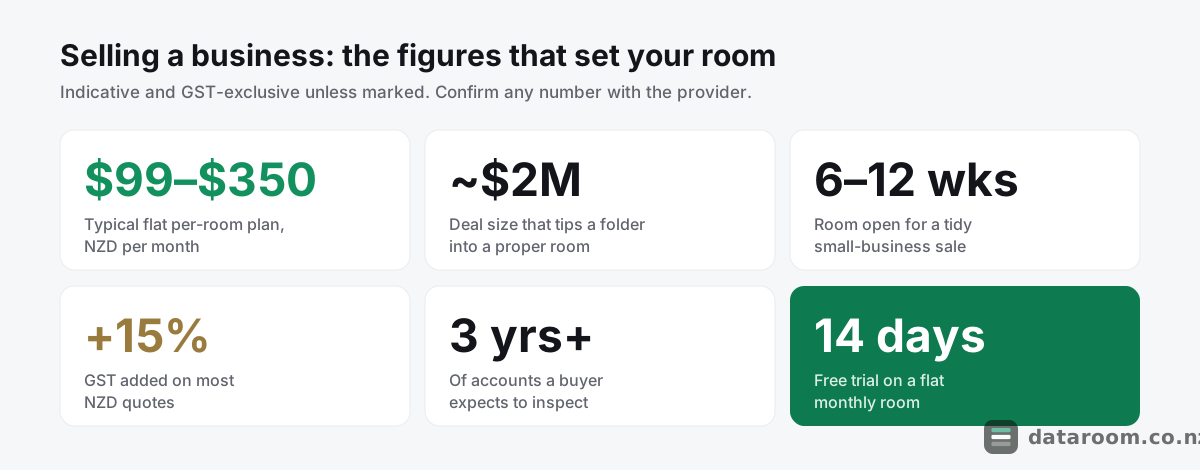
The single most expensive mistake is a per-page platform for a paper-heavy small sale. It turns a tidy quote into an ugly invoice the week your accountant uploads a decade of statements. Our full breakdown of virtual data room pricing in New Zealand sets out the four charging models and the fees that hide in the fine print, and if you are watching every dollar the cheapest virtual data rooms for NZ small deals compares the bottom of the market.
Two levers keep the bill honest. Use the free trial to load a real sample of your own documents and test the interface before you commit, rather than judging on a demo. Then match the plan term to the deal, not the calendar. A three-month term on a sale you expect to run six to twelve weeks avoids paying for an empty room after settlement, and most vendors will flex the term if you ask before you sign.
Do you actually need a formal room, or will a folder do?
A virtual data room is a secure online space for sharing confidential deal documents with controlled, audited, revocable access. Not every sale needs one. Three routes exist, and the matrix shows which conditions make each the right fit.
| Condition | Shared folder | Flat per-room VDR | Full platform |
|---|---|---|---|
| Single, known buyer | ✓ | ✗ | ✗ |
| Two or more competing bidders | ✗ | ✓ | ✓ |
| Staff or customer records disclosed | ✗ | ✓ | ✓ |
| Deal under ~NZD $2M, low risk | ✓ | ✓ | ✗ |
| Deal ~NZD $2M to $10M | ✗ | ✓ | ✓ |
| Deal well above ~NZD $10M, per-page control | ✗ | ✗ | ✓ |
| Structured Q&A between the parties | ✗ | ✓ | ✓ |
| Full audit trail and revocable access needed | ✗ | ✓ | ✓ |
Read it as a ladder, not a menu. Each rung answers a different worry:
- Shared folder. Fits only the smallest single-buyer, low-sensitivity sale, and even then leaves you without an audit trail if a dispute surfaces later.
- Flat per-room VDR. The home for the vast majority of New Zealand sales, from a sub-$5 million trade sale to a mid-market deal with advisers on both sides. Permissions, watermarking and a log without an enterprise price tag.
- Full platform. Per-page metering and a managed process attached, worth it on large multi-bidder deals but overshoot for an owner-operator sale.
Most sellers land in the middle column. The trap at both ends is the same: paying for control you do not have, or control you will never use. If your sale looks more like a merger, the machinery shifts again, and our guide to virtual data rooms for M&A in New Zealand covers the extra warranty and disclosure layers those deals bring.
Three questions settle the folder-or-room call on their own. A yes to any one tips you into a real room. The flowchart traces them to a route so you can place your own sale in about a minute.
The three questions that decide your route
-
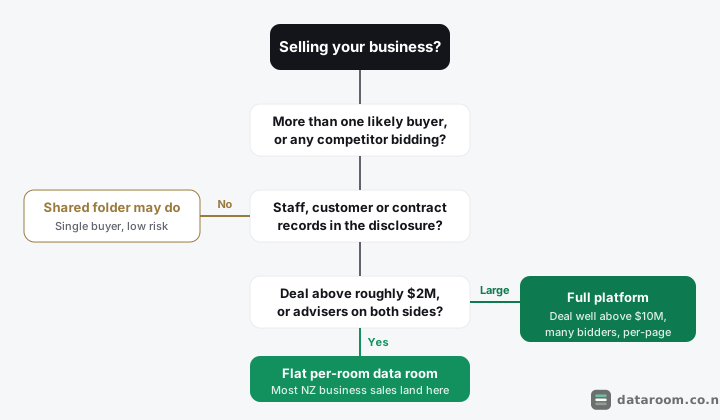
Answer yes to any one question and the balance tips from a folder to a proper, audited room.
Work the three in order. Are there competing buyers? The moment two parties are bidding you must disclose the same sensitive material to rivals, stage what each one sees, and cut access the day one drops out. Does the disclosure include staff, customer or contract data? Those carry legal duties and real competitive value. Is the deal above roughly NZD $2 million, or are advisers engaged on both sides? Once lawyers are working a structured request list, they expect a room, and providing one signals an organised seller.
Which New Zealand sellers need a proper room most?
The rule lands harder against real businesses. Here are four the New Zealand market actually produces:
- Bay of Plenty kiwifruit packhouse, $6M. Supply contracts, seasonal labour records and food-safety consents. The mix of commercial and people data that makes a folder untenable.
- Wellington software consultancy, acqui-hire. Lives or dies on assignable contracts and IP ownership, and a buyer’s lawyer will trace every line.
- Christchurch light-manufacturing firm, thirty staff. A leased site, a plant register and payroll. Squarely flat-per-room territory.
- Otago tourism operator, single trade buyer. A handful of clean assets. This one might genuinely run on a shared folder and a good lawyer.
Notice the pattern. It is not the headline price that decides the room; it is the density of confidential, transferable and regulated information inside the deal.
Two businesses of the same value can sit in different columns because one is asset-light and single-buyer while the other is contract-heavy and contested. Size your room to the information, then sense-check it against the price.
Regulated sectors add a layer of their own. A food producer carries Ministry for Primary Industries risk-management programmes and traceability records, a hospitality business carries liquor and food licences tied to the premises, and a financial-services firm carries Financial Markets Authority licensing that a buyer must be able to hold or reapply for. Where a licence or consent does not simply transfer, the buyer’s lawyer will want the full paper trail early, so those folders belong in the room from day one rather than as a late addition.
When does the data room open?
Timing trips up first-time sellers more than cost does. The room is a due-diligence tool, not a marketing one, so it opens later than people expect. The timeline shows where it fits.
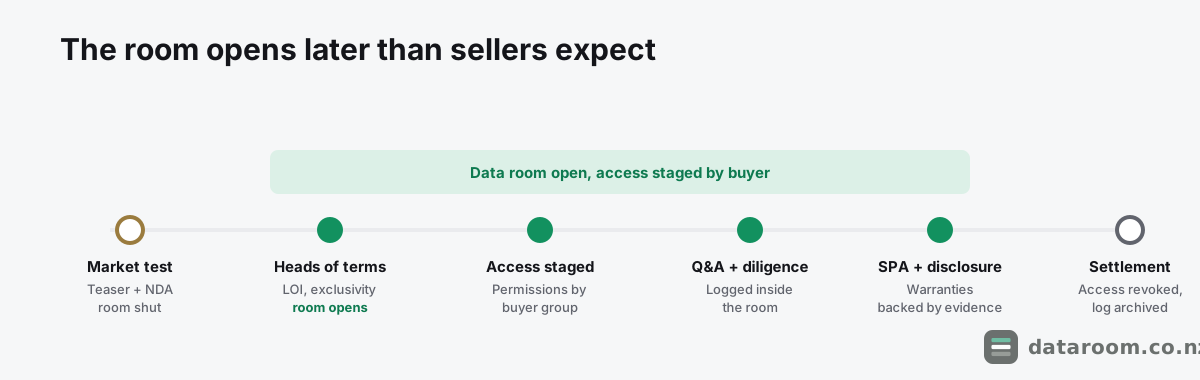
The sequence has a logic worth naming stage by stage:
- Market testing. You circulate a teaser and headline numbers, and every serious party signs an NDA first. The detailed room stays shut, because opening your full financials to a tyre-kicker is how information leaks.
- Heads of terms. A signed letter of intent, usually carrying exclusivity or a confidentiality clause. This is where disclosure becomes warranted and where the room opens.
- Staged access. In a competitive process you run several buyers through the room at once, showing each only what their stage warrants.
- Q&A and diligence. The buyer’s advisers work their request list inside the room, questions logged rather than scattered across email.
The data room is not where you attract a buyer. It is where you keep one. By the time it opens, the buyer is already interested; the room’s job is to turn that interest into confidence without leaking the business to a rival.
How long it stays open depends on the deal. A tidy small-business sale might need the room for six to twelve weeks; a mid-market deal with warranties and a disclosure schedule can run considerably longer. Our guide to how long due diligence takes in New Zealand gives realistic windows you can use to pick a plan term and avoid a needless long lock-in.
What goes in the room, and how do you arrange it?
A buyer’s due-diligence request is a demand for evidence that the business is what you say it is. You can anticipate almost all of it. Seven categories cover a typical New Zealand sale.
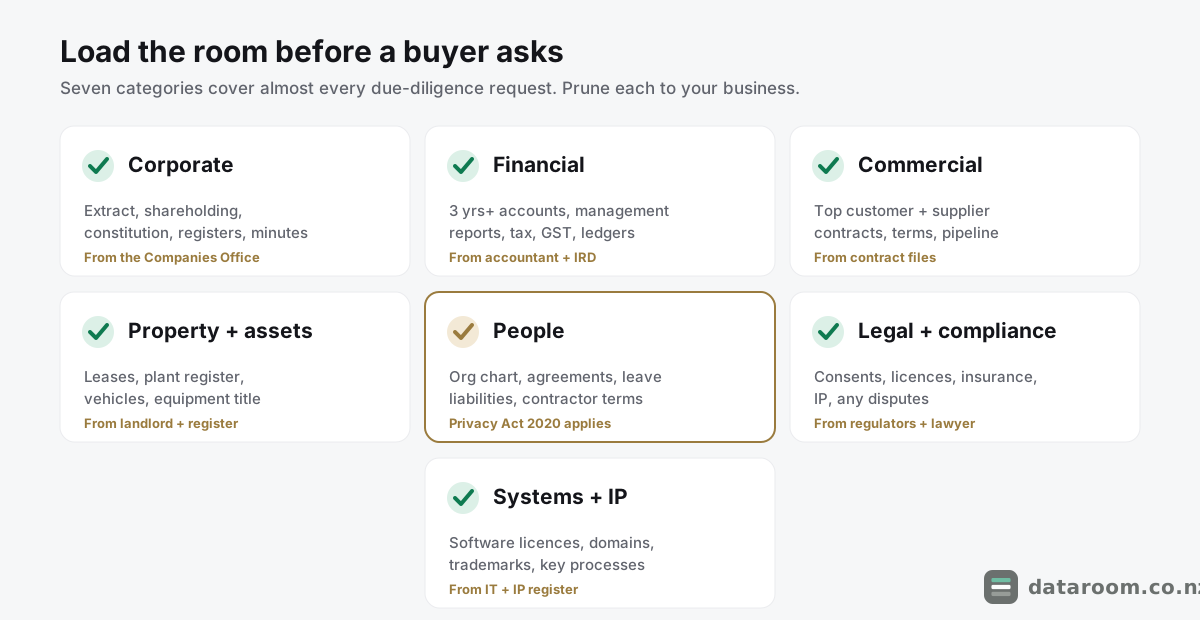
Each category has an obvious source, and a buyer’s lawyer will cross-check the ones they can pull independently:
- Corporate. Company extract, shareholding, constitution, statutory registers and minutes, from your records and the Companies Office register, which a buyer’s lawyer will pull and reconcile against what you loaded.
- Financial. Three or more years of accounts, management reports, tax returns, GST, and the debtors and creditors ledgers, from your accountant and Inland Revenue filings.
- Commercial. Top customer and supplier contracts, terms of trade and the pipeline, from your contract files.
- Property and assets. Leases, the plant register, and vehicle and equipment ownership, from the landlord and asset register.
- People. Org chart, employment agreements, leave liabilities and contractor terms, from HR and payroll.
- Legal and compliance. Consents, licences, insurance, IP and any disputes, from regulators, insurers and your lawyer.
- Systems and IP. Software licences, domains, trademarks and key processes, from IT and the IP register.
Two of these cause most of the trouble. Financials are where a buyer’s confidence is won or lost, so stale or inconsistent numbers do real damage. People data is where the legal risk sits, because employment and customer records are personal information.
Arrange the room the way a stranger would search it, not the way you filed it. A numbered structure a buyer can navigate without asking is worth more than any single document inside it.
Arrangement matters as much as contents. A logical, numbered structure lets a buyer’s team find things without emailing you, which keeps the deal moving. Our data room folder structure template gives a ready layout, and the companion piece on what documents go in a data room drills into each category. Prune the list to your business rather than loading everything on principle.
See which data room fits your sale
Compare NZD pricing, charging models and trials for every provider we track, side by side.
How do you set the room up to sell your business?
You can have a sale-ready room in an afternoon if you work in order. The steps assume a flat per-room tool from the comparison; the fuller general version lives in our how to set up a virtual data room guide.
Set up your sale room in six steps
Build the structure and the content before you invite a single buyer, so the room looks organised from the first login.
- 1
Build the folder structure first
Create the top-level categories, corporate, financial, commercial, people, legal, before uploading anything. A numbered structure lets buyers navigate without asking and signals you are organised.
- 2
Load and label the documents
Upload the core set from your due-diligence checklist, name files consistently with dates and versions, and remove drafts and duplicates so nothing contradicts your numbers.
- 3
Set permissions by group, not by person
Create groups such as seller team, adviser and buyer, and set view, download or view-only rights per folder. Hold the most sensitive people data back for late-stage buyers.
- 4
Turn on watermarking and the audit log
Enable dynamic watermarking on confidential files and confirm the access log is recording who opened what and when, which you will want if confidentiality is ever questioned.
- 5
Invite buyers only after NDAs are signed
Send invitations once each party has signed a non-disclosure agreement, and stage access so competing bidders see only what their stage warrants.
- 6
Run Q&A inside the room
Route buyer questions through the room's Q&A rather than scattered email, so answers are logged, consistent and disclosed to the right parties.
That last step is quietly important. In a competitive sale an answer given to one bidder may need to reach the others, and a paper trail of what was disclosed protects you against a later warranty claim. Running it well is a skill in itself, covered in running data room Q&A without losing control.
Prepare the whole room before the first invitation goes out. A buyer who logs in to a half-empty, unstructured room draws exactly the conclusion you do not want about how the business itself is run.
Share sale or asset sale: how does the deal shape change the room?
In New Zealand a business changes hands one of two ways, and the choice reshapes the room before you load a single file. The distinction is simple:
- Share sale. The buyer acquires the company itself and inherits its whole history. Every past liability, contract, tax position and employment obligation travels with the shares.
- Asset sale. The buyer cherry-picks the specific assets and contracts they want and leaves the company, and much of its history, behind with you.
That single fork drives what you disclose. The same folders carry a different depth in each deal:
| Folder area | Share sale depth | Asset sale depth |
|---|---|---|
| Corporate and statutory history | Full, buyer inherits it all | Light, company stays with you |
| Tax and litigation record | Full, past liabilities transfer | Limited to the assets sold |
| Contracts and leases | Reviewed for change-of-control | Reviewed for assignability |
| Employment records | Full, staff continue | Focused on who transfers |
| Asset title and registers | Confirmatory | Central, must be watertight |
In short, the share-sale room carries the full corporate, tax and litigation record because the buyer is buying the risk as well as the trade, and the buyer’s lawyer will cross-check the Companies Office extract against what you loaded. The asset-sale room is narrower but sharper: it centres on clean title, assignable contracts and which staff transfer, so those folders have to be watertight rather than exhaustive.
Settle the structure with your adviser early. Taking a buyer deep into share-sale diligence when you intended a clean asset sale wastes weeks, and it is the kind of avoidable stall that erodes a buyer’s confidence just when you need it most.
Confidentiality and the Privacy Act 2020: what are your duties?
Selling a business means handing over information you are legally obliged to protect. Two duties sit on top of every disclosure.
The first is contractual confidentiality. Every serious buyer should sign an NDA before the room opens, and the room should let you enforce it:
- Watermarking that stamps a viewer’s identity on each page.
- The ability to disable printing or download on the most sensitive files.
- One-click revocation the day a buyer drops out.
Those controls are the difference between disclosing information and losing control of it.
The second duty is the Privacy Act 2020. Employment records, customer databases and anything that identifies a living person is personal information, and sharing it with a prospective buyer is a use and disclosure you must be able to justify. A due-diligence exception exists, but it is not a blank cheque. You are expected to disclose only what is necessary, keep it secure, and ensure the recipient handles it lawfully. The Office of the Privacy Commissioner’s guidance at privacy.org.nz is the plain-English starting point, and the Privacy Act 2020 itself sets out the information privacy principles.
A granular, audited room is how you demonstrate you met the security duty. A shared drive with a public link is how you fail it. A sensible practice on people data is to redact or hold back the most sensitive fields until late-stage, confirmed buyers, disclosing names and salaries only when a deal is genuinely likely to complete, and a room with proper permissions lets you stage exactly that.
The security duty is also a live risk, not a box to tick. A leaked customer database or a mishandled staff file during diligence can trigger a notifiable privacy breach, and CERT NZ’s guidance at cert.govt.nz covers the practical controls that keep a deal off that list. We cover the deal-specific steps in sharing data in a deal: your Privacy Act 2020 obligations, and for the wider security features to insist on, see virtual data room security for a New Zealand deal.
What mistakes slow a New Zealand business sale down?
The predictable errors are easy to avoid once named, and each carries a cost in time, price or trust:
- No structure. Dumping every file into one folder buries the buyer and invites endless questions.
- Opening too early. The full room before an NDA is signed leaks the business.
- Stale financials. Loading old numbers, then correcting them mid-process, dents the trust the room was meant to build.
- Access left open. A buyer who has walked away but still has a login is a live confidentiality hole.
- Over-buying. A per-page enterprise platform for a paper-heavy small sale burns budget on control you do not need.
Our roundup of data room mistakes that slow down NZ deals works through the full list. The through-line is simple: prepare before the buyer arrives, disclose in stages, and keep an audit trail the whole way.
A flat monthly room for a straightforward NZ sale
Predictable pricing, a 14-day free trial and no per-page metering to model before you sign.
What happens to the room if the sale falls through?
Deals collapse, and a surprising number of confidentiality problems start the day one does. The moment a buyer walks, treat their access as a hazard rather than a courtesy. Three actions close it cleanly:
- Revoke access immediately. Cut the buyer’s group the same day, not at the end of the month. A room lets you do it in one click; a shared drive does not.
- Pull the audit log. Export the record of what that buyer opened and downloaded, so you know exactly what left the room if a dispute follows.
- Enforce return or destruction. A well-drafted NDA requires the buyer to return or destroy your material, and the log is your evidence of what they had.
Keep the room itself running if other bidders are still live, and simply re-stage their access. If the whole process pauses, most vendors let you archive or suspend the room rather than delete it, so a revived deal does not mean rebuilding from scratch. The point is control: a business that went to market and did not sell should not also have leaked itself in the attempt.
How does the data room fit the wider sale?
The data room is one workstream inside a bigger sale, and it is worth keeping in proportion. The value of your business is set long before the room opens, by your accounts, your customer concentration and your growth story. The room does not raise that number. It protects it, by getting a prepared buyer to a confident yes without a leak or a stall.
New Zealand has an active market for small and mid-sized business sales. The government’s own guidance on selling a business at business.govt.nz is a good orientation to the non-data-room parts, from valuation to the sale and purchase agreement. Treat the room as the disclosure engine underneath all of that: the place where the promises in your sale document are backed by evidence a buyer can inspect on their own time, under your control.
Get that part right and the data room becomes what it should be, a quiet piece of infrastructure that makes a serious buyer’s job easy and a nervous one’s job impossible. When you are ready to choose the specific tool, the comparison table lines up the options against price and features for a New Zealand sale.
Selling a business and the data room: FAQ
Do I need a data room to sell a small business in New Zealand?
Not always. A single, known buyer of a small, low-risk business can sometimes be run through a well-permissioned shared folder. But the moment you have competing bidders, disclose staff or customer records, or the deal runs above roughly NZD $2 million, a proper data room protects confidentiality and speeds up due diligence. For most sales it is the right call.
When in the sale should I open the data room?
After a buyer signals genuine intent, usually at heads of terms or a signed letter of intent, and always after a non-disclosure agreement. Early market testing runs on a teaser and headline numbers only. Opening your full financials and customer list to a casual enquirer is how sensitive information leaks.
What does a data room cost to sell a business in NZ?
For a typical owner-operator sale, indicatively NZD $99 to $350 a month on a flat per-room plan, GST-exclusive. Larger multi-bidder deals can run to NZD $900 or more on a full platform. Avoid per-page pricing for a paper-heavy small sale, since scanned leases and accounts inflate the page count. Confirm any figure with the provider.
Does a share sale or an asset sale change what goes in the room?
Yes. A share sale means the buyer inherits the whole company, so the room carries the full corporate, tax and litigation history. An asset sale is narrower but sharper: it centres on clean title to each asset, whether contracts and leases can be assigned, and whether staff transfer. Settle the structure with your adviser before you build the room.
Can I share employee records with a buyer legally?
Yes, but carefully. Employment records are personal information under the Privacy Act 2020, so disclose only what is necessary, keep it secure, and stage the most sensitive fields for late, confirmed buyers. A granular, audited room helps you meet the security duty. See the Office of the Privacy Commissioner at privacy.org.nz for the principles.
Is a shared folder like Dropbox good enough to sell a business?
Only for the smallest, single-buyer, low-sensitivity sale, and even then it leaves you without watermarking, granular permissions or a proper audit trail. For any competitive or higher-value deal it is a false economy the moment a confidentiality dispute or a Privacy Act obligation surfaces.