
Best Data Room for Industrials in New Zealand (2026)
Compare virtual data rooms for NZ industrials in 2026: plant and asset sales, WorkSafe files, supply contracts, environmental consents and NZD pricing.
Best data rooms for Industrials in New Zealand
Our shortlist for this use case, ranked after review. Independent, with indicative NZD pricing. Compare them all in the full table.
- 1
The modern data room. Live in minutes on a 14-day free trial.
Visit site SponsoredView profile - 2
Flat-rate value for advisors and mid-market deals.
- 3

Built in Australasia; AI deal tools, strong local support.
- 4

US enterprise data room with strong DRM and cross-border compliance.
What belongs on the bench before you open the room?
Selling a working industrial business is not a document dump you can improvise. Stage the core file before the first invitation, and the deal reads as run by operators, not cobbled together after the offer.
Work this checklist first. Then load each item with its gaps flagged, never hidden.
- The asset register. Every material item of plant, with make, model, serial, install date, book value and finance status.
- The maintenance record. Service logs, calibration and inspection certificates, and the remaining-life view on the assets that carry the valuation.
- The health and safety file. WorkSafe notifiable-event history, hazard registers, safe work method statements and the most recent audit.
- The site position. Resource consents, discharge or air consents, contaminated-land status, and the certificate of title with easements.
- The revenue contracts. Customer supply agreements, distribution and freight contracts, and the key input deals that keep the line running.
- The people. Org chart, employment agreements for key staff, any collective agreement, and the ACC or accredited-employer position.
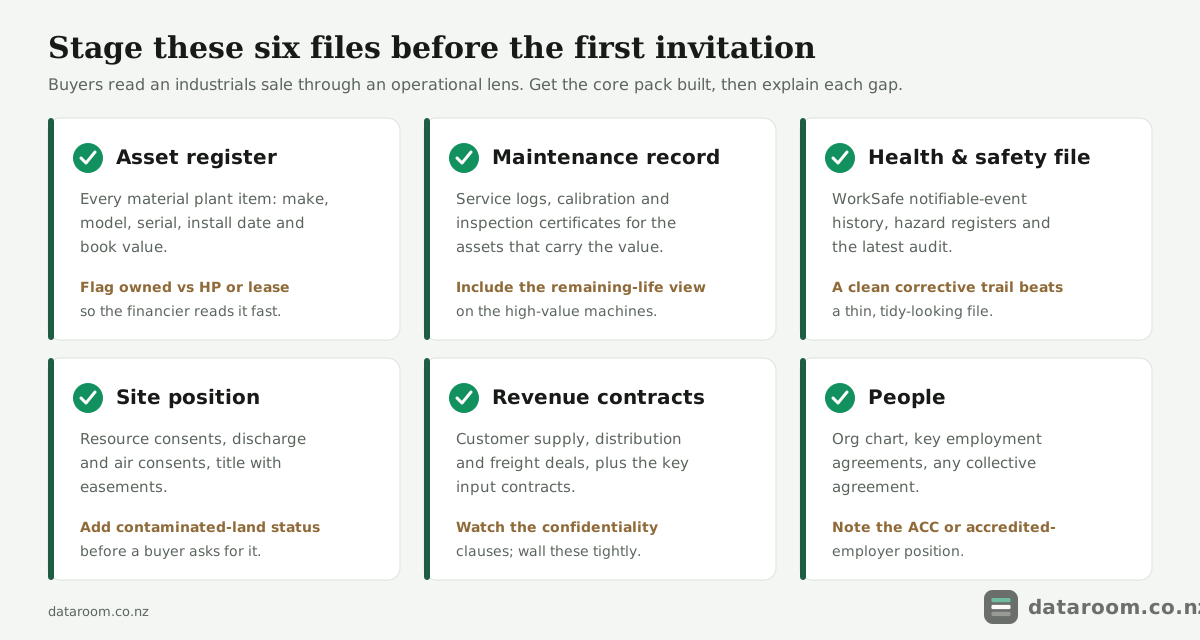
Each item answers a question a buyer will otherwise ask under time pressure. A pre-answered question does not become a price chip.
Three rules make the pack behave:
- Flag finance on the asset register. Separate what is owned outright from what sits on hire purchase or an operating lease. A financier reads that column first, and a surprise lease reprices the machine.
- Show remaining life, not just history. A calibration log proves the past; a remaining-life view on the high-value assets proves the future, which is the number the valuation rides on.
- Never leave a silent gap. If something is mid-renewal or genuinely missing, mark it outstanding in the room. Buyers forgive a dated “to follow” note; they punish a hole they trip over.
How do you split a plant or asset sale into workstreams?
Industrials diligence does not run on one linear checklist. It runs in parallel: an operations reviewer walks the asset register while a lawyer reads the customer contracts and an environmental consultant works the consents.
Build the folder tree around those workstreams, not around who sent the document. Each reviewer then lands straight in their lane.
Map every document to a workstream and a permission group before you upload anything:
| Workstream | Core documents | Who needs it |
|---|---|---|
| Plant & equipment | Asset register, valuations, HP and lease schedules, maintenance and calibration logs | Buyer ops, financier, valuer |
| Health & safety | WorkSafe event history, hazard register, SWMS, audits, certifications | Buyer HSE lead, lawyers |
| Environmental | Resource consents, discharge and air consents, PSI/DSI reports, monitoring data | Environmental consultant, lawyers |
| Customer & revenue | Supply agreements, distribution and freight contracts, order book, customer concentration | Buyer commercial, lawyers |
| Supply chain | Key input deals, sole-source arrangements, inventory and WIP position | Buyer ops, lawyers |
| Property & site | Certificate of title, leases, easements, building WoF, seismic reports | Lawyers, financier |
| People | Org chart, key employment agreements, collective agreement, ACC status | Buyer HR, lawyers |
| Corporate & financial | Constitution, financials, tax position, insurance schedule | Financier, lawyers, accountants |
Group-level permissions let all of these sit in one room without a customer’s pricing leaking to a workstream that has no business seeing it.
That matters more in industrials than most sectors. Your customer contracts often carry confidentiality clauses, so a supplier or customer name in front of the wrong reviewer can breach them.
Think of access as tightening by layer: from a corporate baseline every invitee sees, down to NDA-gated contracts a handful of people ever open.
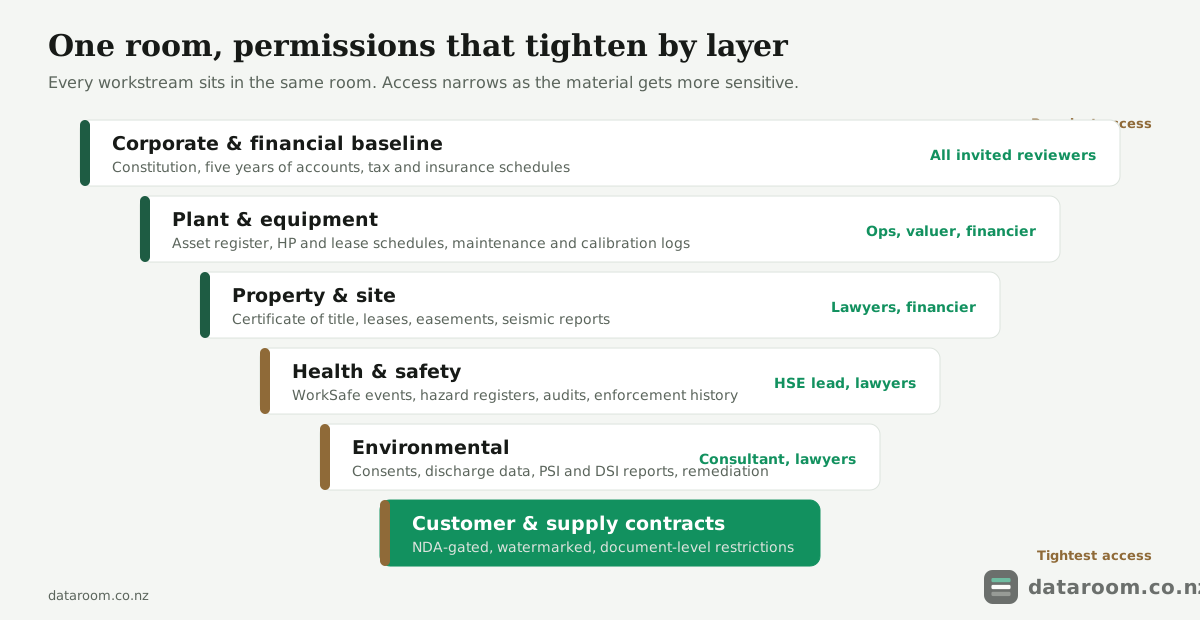
For a fuller build order, our folder structure template sets out the tree end to end. The guide to what documents go in a data room covers the corporate baseline at the top of that stack.
Why do buyers stress-test your WorkSafe and safety file first?
Because in a manufacturing, engineering or logistics deal, safety is where the hidden liability lives, and a buyer knows it.
Under the Health and Safety at Work Act 2015, a person conducting a business or undertaking carries duties that do not vanish at settlement. A new owner inherits the site’s history along with its machines, and that history sits with WorkSafe NZ.
A single unresolved notifiable event, or a pattern of them, can reprice a deal or stall it while lawyers work out who wears the exposure.
Put the honest picture in the room from day one:
- The notifiable-event history. Every event reported to WorkSafe, the investigation outcome, and what changed as a result. A clean corrective-action trail reads far better than a thin file.
- The live hazard and risk registers. Current, dated, and showing the controls in place, not a template last touched three years ago.
- Any enforcement action. Improvement or prohibition notices, and dated evidence they were closed out.
- Certifications and audits. ISO 45001 or an equivalent third-party audit carries real weight; feature it, and keep the certificate version-controlled.
In an industrials deal the safety file is not compliance housekeeping. It is the workstream a buyer opens first, because it is the one that can move the price.
The room’s audit log does quiet work here too. It shows exactly which safety documents the buyer opened and when, which protects you if a dispute later surfaces about what was disclosed.
Incident and employee records hold personal information, so permission them tightly and never park them in a general folder while you sort access.
How do environmental consents and contaminated land reshape the pack?
This is the workstream that catches vendors off guard. The risk sits in the ground and in a regional council file, not on the balance sheet.
Two strands run in parallel, and both need staging before a buyer asks.
- Consents. Load the current resource consent, its conditions, the compliance monitoring and any abatement or infringement notices. Consents under the Resource Management Act 1991 carry expiry dates and transfer mechanics, so a reviewer checks whether yours survives a change of ownership.
- Contaminated land. If the site ever hosted an activity on the Hazardous Activities and Industries List, the National Environmental Standard for contaminants in soil can bite on any future development. A site investigation report then becomes material.
Hazardous substances on an industrial site fall under rules the Environmental Protection Authority administers, which is why a site’s chemical history matters to a buyer. Find a HAIL history unflagged, and they assume the worst and price it in.
How much work does the environmental file need?
The decision is usually a short one:
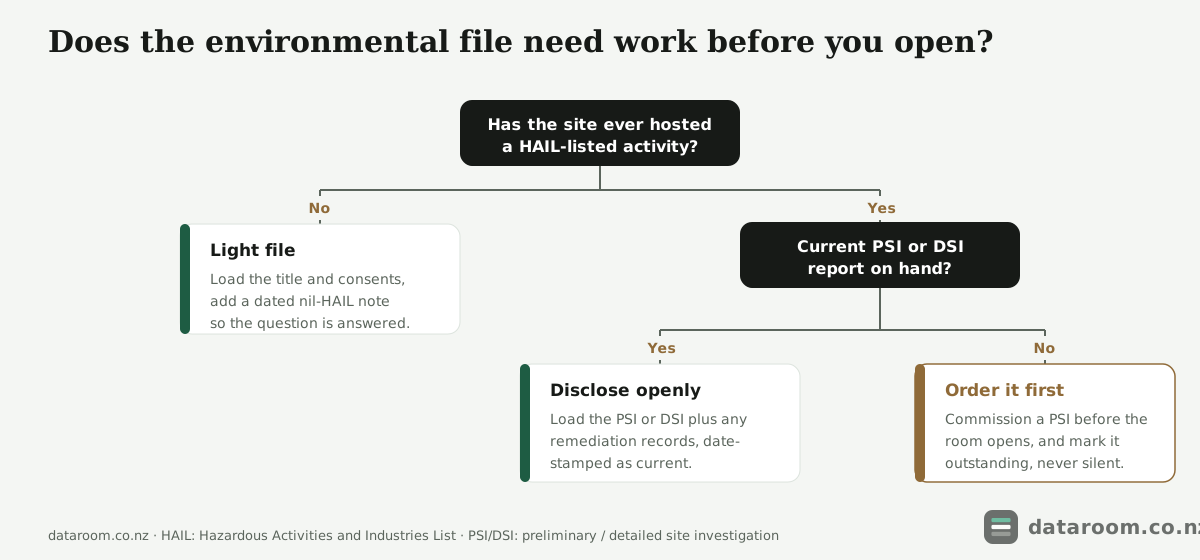
Two practical moves save weeks either way:
- Order fresh reports before the room opens, not after a buyer asks. A stale environmental report reads as concealment even when it is just neglect.
- Keep monitoring data continuous. A gap in discharge monitoring invites a compliance question you would rather answer on your own terms.
Handled openly, the environmental file becomes a point of confidence rather than the thing that unravels the deal at week six.
Which room controls actually earn their place?
Not every feature on a vendor’s brochure matters to a plant sale, and a few that rarely get demoed matter enormously.
Read the matrix both ways. Check that a lean plan has not dropped a control your bidders will demand, and that an enterprise tier is not charging you for tooling a nine-week trade sale never touches.
| Control | Single-site asset sale | Mid-market manufacturer | Multi-site group |
|---|---|---|---|
| Group-level permissions per workstream | ✓ | ✓ | ✓ |
| Full audit trail and access logs | ✓ | ✓ | ✓ |
| Large-file and CAD drawing viewer | ✓ | ✓ | ✓ |
| Dynamic watermarking on contracts | ✗ | ✓ | ✓ |
| Structured Q&A with assignment | ✗ | ✓ | ✓ |
| Document-level NDA gating and redaction | ✗ | ✓ | ✓ |
| Bulk upload and auto-indexing | ✗ | ✓ | ✓ |
| Dedicated NZ-hours support desk | ✗ | ✗ | ✓ |
Two rows decide most of these deals:
- The drawing viewer is non-negotiable across all three columns. A room that forces every reviewer to download a heavy CAD set is slow and quietly leaks control, so test your actual file types before you sign.
- Structured Q&A turns a document store into a deal room the moment two workstreams run at once. A shared inbox loses track of who asked what about the safety file versus the supply contracts.
Below the mid tier, those two are the lines a bidder notices first.
What does an industrials room cost, and how long does it stay open?
Asset and plant sales sit in the middle of the pricing spectrum. Heavier than a small-business sale because of the technical document volume, lighter than a listed-company process.
The bigger variable is time. Operational diligence on a working site runs longer than a paper business.
Treat the figures below as indicative NZD to frame a conversation, not quotes. Compare the current shortlist on our pricing page and in the main comparison table.
| Deal shape | Indicative NZD | What drives it |
|---|---|---|
| Single-site plant or asset sale | from ~$150 to $400/mo | Capped users, flat monthly, short window |
| Mid-market manufacturer or logistics business | ~$500 to $1,200/mo | Structured Q&A, multiple workstreams, 3 to 6 month process |
| Multi-site or group sale | ~$1,500 to $3,000+/mo | Many reviewer groups, large drawing and CAD volume, longer window |
A single-site sale can stay lean; our guide to data rooms for small business in NZ covers that lighter end.
Two traps are worth naming, and both live at the edges of the deal rather than in the busy middle:
- Storage-metered pricing hurts industrials disproportionately. CAD files, engineering drawings and high-resolution site imagery are heavy, and a plan-heavy room can outrun a flat monthly rate badly. For most asset sales a flat figure is the safer number to plan around.
- Budget the tail. Warranty and indemnity claims on a plant sale can surface a year or more after settlement, so ask how the provider prices a dormant, read-only room you keep for the audit trail.
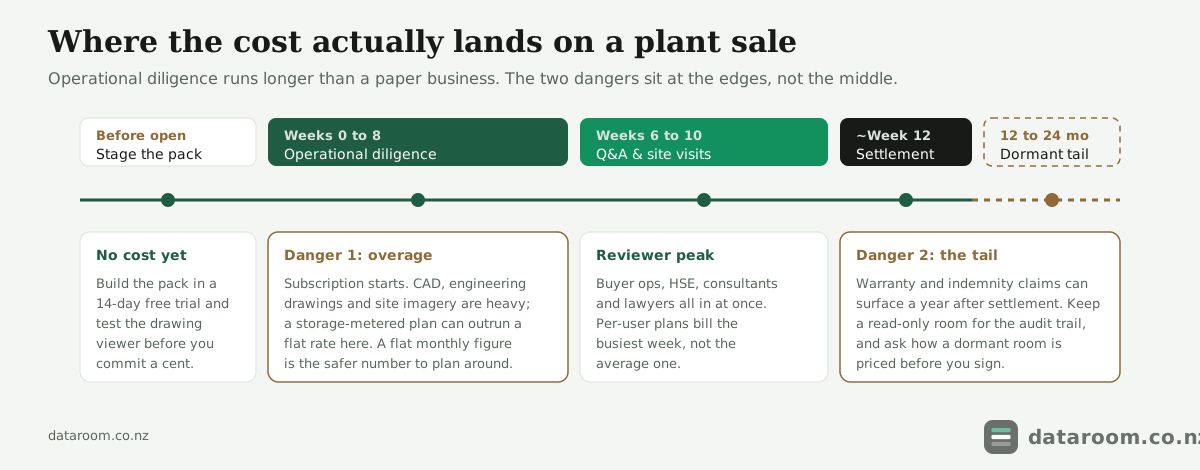
A 14-day free trial lets you build the pack and test the drawing viewer before you commit a cent. It is the cheapest way to catch a storage or viewer problem before it costs you mid-deal.
See flat monthly pricing for a plant or asset sale
No per-page metering to model against a drawing-heavy room, and a 14-day free trial to test the viewer first.
How do you stage the room without stalling the plant floor?
The staging work should not pull your operators off the line for a fortnight. Sequence it so the slow files are ordered early and the fast ones fill in around them.
Do that, and the room is buyer-ready without a scramble the week before launch.
Stage the room in five moves
Order the slow files first, build the permission walls before you upload, and open only when the outstanding list is honest.
- 1
Order the slow reports first
Environmental site investigations, seismic assessments and independent valuations take weeks to commission. Start them before anything else so they are current when the room opens, not chased mid-deal.
- 2
Build the workstream tree and walls
Create the eight workstream folders and their permission groups before you upload a single file, so no document ever sits in the open while you decide who should see it.
- 3
Load the asset and maintenance spine
Populate the plant register, HP and lease schedules and maintenance logs first. This is the workstream a buyer's operations reviewer opens on day one, so it should never be the thin one.
- 4
Wall and watermark the sensitive contracts
Place customer and supply agreements in their own NDA-gated group, watermark the commercially sensitive ones, and confirm the audit log records who opens them.
- 5
Publish the outstanding list, then open
Mark anything mid-renewal or in progress as outstanding inside the room. An honest gap dated for follow-up beats a silent hole a reviewer finds first.
How do you keep customer contracts and people files from leaking?
Two workstreams carry the leak risk in an industrials sale, and both can breach an obligation rather than merely embarrass you. Handle them with deliberate controls, not goodwill.
- Customer and supply contracts. Many carry confidentiality clauses, so a supplier or customer name in front of the wrong reviewer is a breach, not a slip. Keep them in their own permissioned workstream, NDA-gate the most sensitive, watermark them, and use the audit log to show who accessed each.
- People files. Employment agreements, incident records and ACC correspondence hold personal information the Privacy Act 2020 expects you to safeguard. Permission them to the buyer’s HR and legal reviewers only.
- Regulated and mobile plant records. Certificates of fitness, operator tickets and periodic inspection records belong in the plant workstream alongside the asset register. A complete record here shortens the operations review noticeably.
For the employer duties behind those people files, business.govt.nz is a plain-English starting point on health and safety. If your site carries heavier environmental or extraction consents, our oil and gas use case covers that load.
Industrials data room FAQ
Do I really need a data room, or will a shared drive do?
For a single machine sold to one buyer, a folder can cover it. A working-business or multi-asset sale cannot: you need per-workstream permissions, an audit log of who opened the safety and environmental file, and confidentiality control over customer contracts. A shared link gives you none of that, and it reads as amateur to a buyer's operations and legal team.
How do I stop a customer's pricing leaking to the wrong reviewer?
Put customer and supply contracts in their own permissioned workstream, and keep the most commercially sensitive agreements NDA-gated with document-level restrictions or redaction. Many industrial contracts carry confidentiality clauses, so watermark the sensitive ones and use the audit log to show exactly who accessed them.
Can the room handle engineering drawings and CAD files?
Most rooms preview common formats and let reviewers download the rest, but heavy CAD and drawing sets are where storage-metered plans get expensive and slow viewers show. Test your actual file types in a free trial and confirm the viewer handles them before you commit, since a room that forces every reviewer to download leaks control.
What about our forklift and mobile-plant records?
Keep certificates of fitness, operator tickets and periodic inspection records in the plant workstream alongside the asset register. Buyers check that regulated and mobile plant is compliant and inspected, and a complete record here shortens the operations review noticeably.
How does contaminated land affect the sale?
If the site ever hosted a HAIL-listed activity, load any preliminary or detailed site investigation report, remediation records and the regional council's contaminated-land position early, date-stamped as current. If no report exists, commission one before the room opens and mark it outstanding. A HAIL history a buyer finds unflagged gets priced at the worst case.
How long should we keep the room open after settlement?
Longer than the deal. Warranty and indemnity claims on a plant sale can surface a year or more after closing, so keep a dormant, read-only room for the audit trail and ask the provider how that is priced before you sign. It is far cheaper than reconstructing what was disclosed if a dispute lands.
Explore other use cases
A data room fits more than one kind of deal. See our other New Zealand guides.
Consumer & retail
How a virtual data room fits consumer & retail deals in New Zealand.
See the guideDue diligence
How a virtual data room fits due diligence deals in New Zealand.
See the guideFinancial institutions
How a virtual data room fits financial institutions deals in New Zealand.
See the guideHealthcare & life sciences
How a virtual data room fits healthcare & life sciences deals in New Zealand.
See the guideM&A
How a virtual data room fits m&a deals in New Zealand.
See the guideOil & gas
How a virtual data room fits oil & gas deals in New Zealand.
See the guideRenewable energy
How a virtual data room fits renewable energy deals in New Zealand.
See the guideReal estate
How a virtual data room fits real estate deals in New Zealand.
See the guideStartup fundraising
How a virtual data room fits startup fundraising deals in New Zealand.
See the guideTechnology, media & telecom
How a virtual data room fits technology, media & telecom deals in New Zealand.
See the guide