
Best Data Room for M&A in New Zealand (2026)
Compare the best virtual data rooms for M&A in New Zealand (2026). Independent rankings on security, deal features and indicative NZD pricing.
Best data rooms for M&A in New Zealand
Our shortlist for this use case, ranked after review. Independent, with indicative NZD pricing. Compare them all in the full table.
- 1
The modern data room. Live in minutes on a 14-day free trial.
Visit site SponsoredView profile - 2

Built in Australasia; AI deal tools, strong local support.
- 3
Enterprise M&A standard; deep audit trails.
- 4

The original VDR, built for large, complex financial transactions.
What an M&A data room does for your deal
Two things decide how a New Zealand M&A room performs, and neither is the logo.
The first is which chair you sit in. A seller and a buyer want opposite things from the identical software. The second is the size and heat of the deal, because a $2m trade sale and a $200m carve-out are barely the same activity.
Read the matrix below before the prose. It maps the single most useful split in this guide: what each side of the table actually needs from the same room.
| What the room controls | Sell-side wants | Buy-side wants |
|---|---|---|
| Permissions | Tight, staged release; a first-round tyre-kicker sees less than a shortlisted bidder | Full access once shortlisted, with nothing quietly withheld before signing |
| Downloads | View-only and watermarking on the crown jewels; controlled or blocked exports | Print or download for the deal team and financiers to work offline |
| Q&A | Route questions to the right adviser; keep answers consistent across bidders | Fast, complete answers and a threaded record to anchor warranty positions |
| Analytics | See which bidders are genuinely engaged and which have gone cold | Little interest; the buyer is reading, not watching |
| Audit trail | Prove a fair, equal process if an underbidder complains later | Prove what was disclosed, so a post-close issue is clearly on the record |
What does the data room actually decide in an NZ deal?
Price is agreed early, in the heads of terms, inside the heads of two or three people. What kills a deal is everything that happens afterwards, in the grind of disclosure. That grind is where the room either holds the process together or lets momentum leak away.
That matters more in a small market than a large one. NZ transactions rarely have the process muscle of a big offshore deal. They are often founder-led, frequently cross-Tasman, and usually run by a lawyer and an accountant who are also doing four other things that week.
Nobody babysits the room full time. So the software has to carry load that people would carry by hand in a larger deal, which is why its four load-bearing parts are worth understanding before you shop.
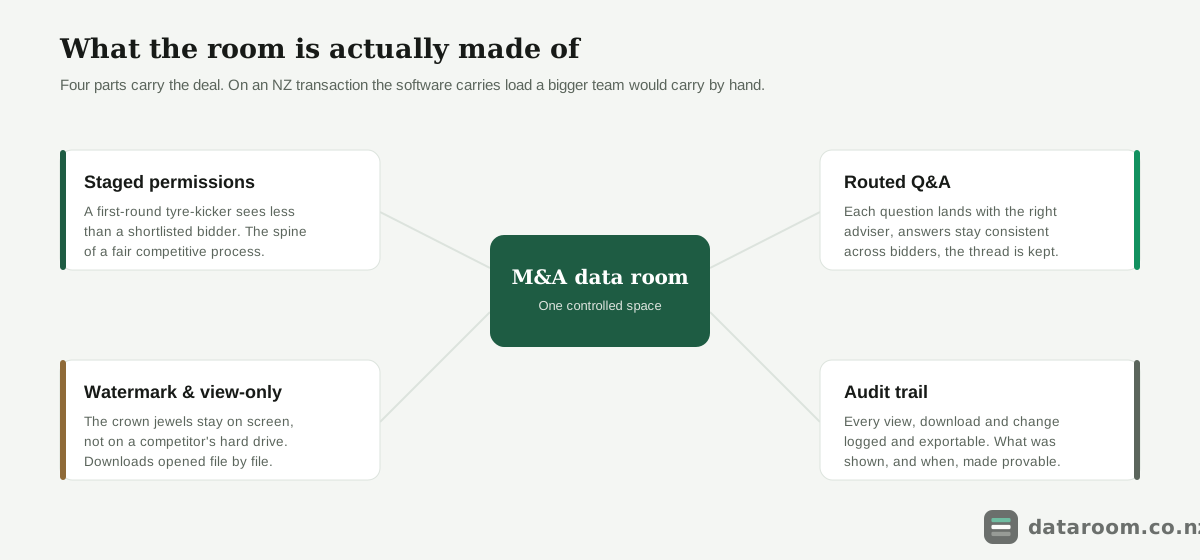
Each part does a specific job:
- Staged permissions let you run a real auction without over-disclosing to a party who drops out.
- Watermarking and view-only keep sensitive files on screen rather than on a rival’s hard drive.
- Routed Q&A turns a document store into a deal room.
- The audit trail makes the whole thing defensible two years later, when a warranty argument becomes about what was actually shown.
Get those four right and a competitive process stays competitive. Get them wrong and one side eventually walks.
Are you sitting buy-side or sell-side?
A virtual data room is shared ground, but the two sides sit on opposite edges of it. The features that reassure one can frustrate the other. Knowing which side you are on tells you what to prioritise before a salesperson does.
The seller’s job
The seller wants control and evidence. Disclose enough to get a clean price, never more than the bidder in front of you has earned, and be able to prove afterwards exactly what was shared with whom.
Because the seller buys the room, its defaults will suit that goal. The sell-side process lives or dies on permission staging and the exportable log. A seller who cannot show a disappointed underbidder that the process was fair is a seller inviting a dispute.
The buyer’s job
The buyer wants coverage and speed. See everything that could bite later, get answers fast, and leave with a record that supports a warranty claim down the track.
A buyer with leverage can and should push back on view-only limits that stop its financiers doing real work, but the smart ask is targeted. Request offline access to the specific documents your advisers need to model, not download rights across the entire room. The second demand reads as a trust problem; the first reads as diligence.
The room is not neutral ground. The best providers let the seller relax controls bidder by bidder, so a buyer with leverage can win access to what it genuinely needs without forcing an all-or-nothing fight.
Which deal-size tier are you actually running?
There is no single right data room for New Zealand M&A. The deals span two orders of magnitude in value and complexity. Paying enterprise rates for a founder sale wastes money; running a mid-market process on a shared drive costs far more than the licence you saved.
The sensible move is to match the room to the band. The three bands below cover almost every NZ transaction.
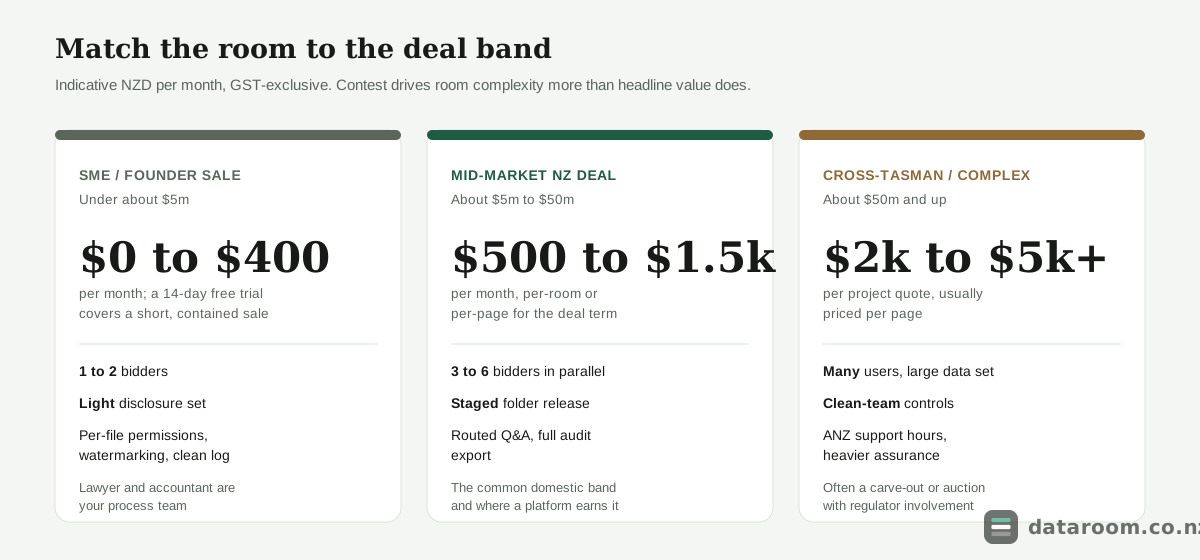
| Deal band | What the room actually needs | Indicative NZD |
|---|---|---|
| SME / founder trade sale (under ~$5m) | One controlled space, per-file permissions, watermarking, a clean audit trail; one or two bidders, a light disclosure set | ~$0 to $400/mo; a 14-day free trial covers a short, contained process |
| Mid-market NZ deal (~$5m to $50m) | Multiple bidders in parallel, staged folder release, routed Q&A, full audit export; the common domestic band | ~$500 to $1,500/mo, per-room or per-page for the deal term |
| Cross-Tasman / complex (~$50m+) | Large data sets, many users, ANZ support hours, clean-team controls, heavier assurance; often a carve-out or auction | ~$2,000 to $5,000+, per-project quote, usually per-page |
The band boundaries are soft, and the middle column matters more than the price. A $6m deal with a strained relationship and a nervous buyer can need more room than a $40m deal between two parties who already trust each other.
Contest drives room complexity far more than headline value does. Be honest about how contested your process will really be before you size the spend. Overshoot and you pay for metering a nine-week sale will never touch; undershoot and you feel the gap on day one, when a bidder asks for something the tool cannot do.
How do you stage disclosure without arming a rival?
The hardest problem in a competitive NZ sale is not disclosing too little. It is disclosing the right thing to the right party at the right moment, especially when one of your bidders is a trade buyer who competes with the target.
Hand a competitor your full customer list and pricing on day one and you have armed a rival whether or not they ever sign. Staged release is the answer. A room that lets you build permission sets per party and open folders progressively is what makes it work in practice.
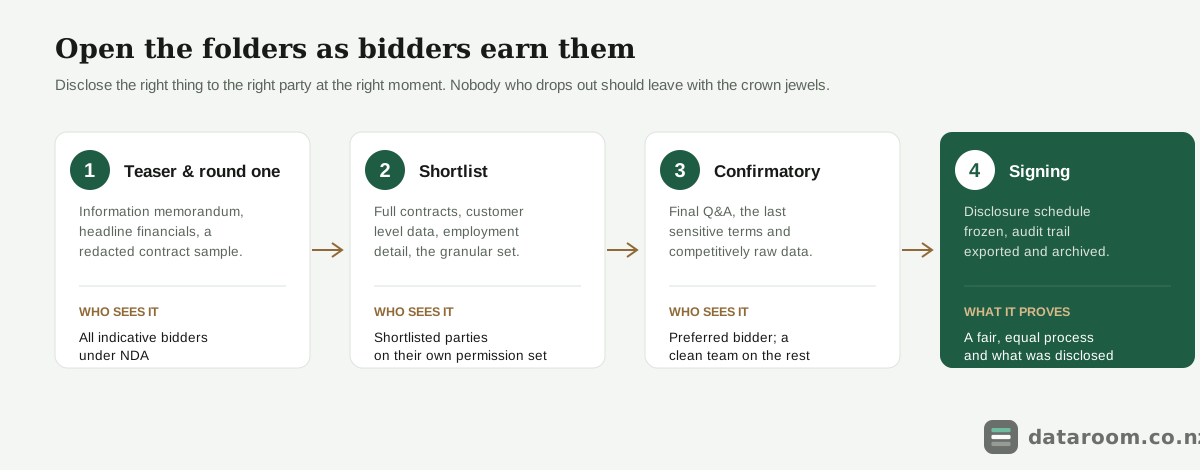
Round one keeps it thin
First-round bidders see the information memorandum, headline financials and perhaps a redacted contract sample. That is enough to draw an indicative offer and nothing that would hurt if a party walks away the next week.
Every indicative bidder is under NDA, but an NDA is a legal remedy after the fact. A permission set is a control before it. Lean on the control.
Shortlist and confirmatory open the granular set
Only shortlisted parties get the granular contracts, the customer-level data and the employment detail, each on their own permission set. That lets you see and shape exactly what each bidder can reach.
By confirmatory diligence the preferred bidder is working through the last sensitive terms, and the rawest material still sits behind a further wall. That is where the clean team comes in.
A room that forces an all-or-nothing choice between locked and open cannot run this shape. A room built for M&A relaxes controls bidder by bidder and folder by folder.
What is a clean team, and when does an NZ deal need one?
For the most sensitive material, competitively sensitive pricing, key customer terms, anything that would raise concerns under competition law if it moved between competitors, you restrict access to a ring-fenced group of external advisers. They assess it without the buyer’s commercial team ever seeing the raw data.
That group is the clean team. It is how you keep a competitor bidder in a process without handing them the keys.
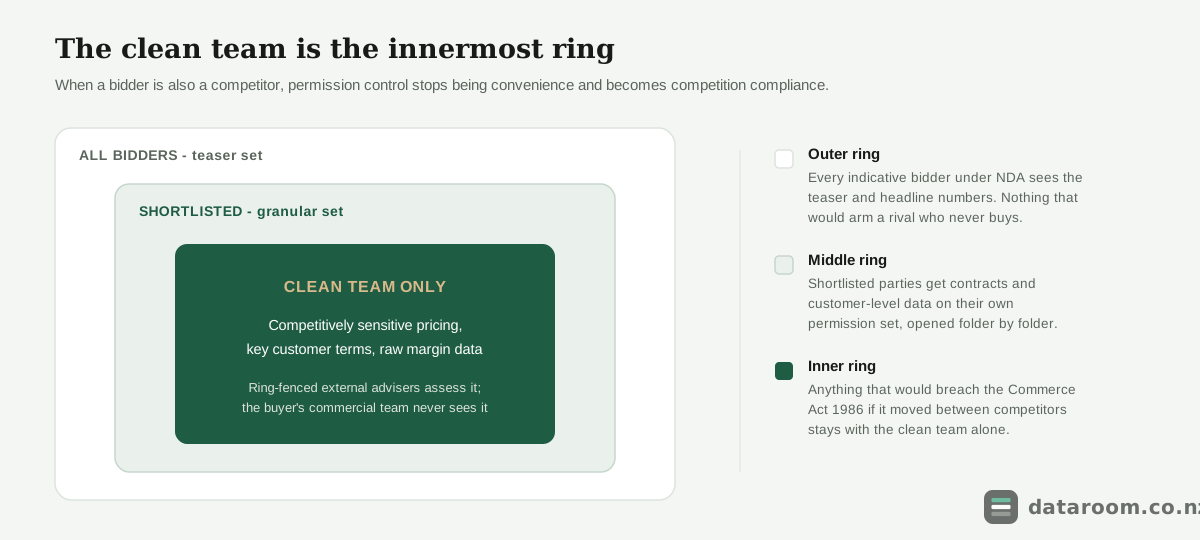
You need one when a bidder is also a competitor and sharing certain information directly could distort competition. On larger cross-Tasman and auction processes this is not optional; on a straightforward founder sale it is usually overkill.
The permission model in the room is what makes the clean team enforceable rather than a promise. The ring-fence is a set of access rules the log can prove, not a handshake you hope everyone honoured. When you compare providers, check that clean-team permissions are a native feature, not something you have to fake with parallel rooms.
Which documents actually belong in the room?
A room is only as useful as what goes into it. On an NZ deal the single biggest time cost is preparing that material, not operating the software.
Build the room internal-only and close your information gaps before the first bidder is invited. A tool with drag-and-drop upload and auto-indexing shortens setup but cannot find a contract you never signed. Our due diligence checklist for NZ deals sets out what buyers ask for, folder by folder.
The core set for a New Zealand target usually runs across a handful of predictable folders:
- Corporate and constitutional. Company extract and share register from the Companies Register, constitution, shareholder agreements, cap table and any options or convertible notes.
- Financial. Three to five years of accounts, management reporting, tax position, debt facilities and the working-capital detail a buyer will price off.
- Contracts. Key customer and supplier agreements, and critically the change-of-control clauses, since those decide which third-party consents you will chase before completion.
- People. Employment agreements, the key-person detail, incentive schemes and any restraint provisions.
- Property and assets. Leases, resource consents, plant and equipment registers, and any resource or regulatory approvals tied to the site.
- Legal and risk. Litigation, insurance, intellectual property, and privacy and data-handling practices, which matter more every year.
The order and depth shift by industry. The sell-side discipline is to load the room once, cleanly, rather than dribbling documents in as bidders ask. A late, disorganised upload reads to a buyer as a governance flag long before it reads as a scheduling slip.
What really moves an NZ M&A timeline?
Both sides say they want to move fast, then spend the deal blaming each other for delay. In practice a New Zealand timeline is moved by a short list of things, and only some of them are about the software.
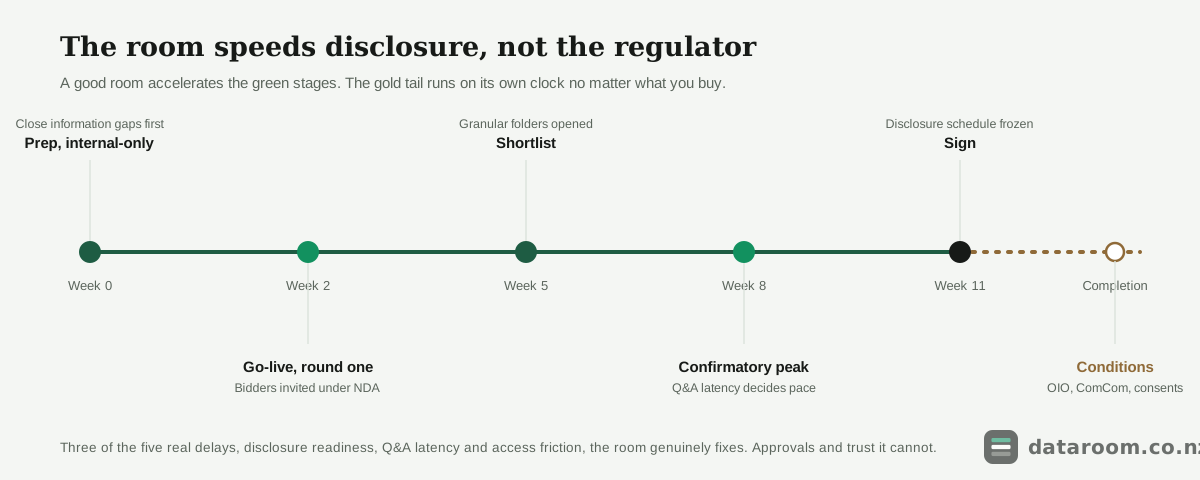
What the room genuinely accelerates
- Disclosure readiness. Won before anyone is invited, by building the room privately and closing gaps.
- Q&A latency. Routed questions with clear ownership and a threaded history turn a two-week answer into a two-day one, especially when several bidders ask overlapping things.
- Access friction. Quietly expensive on cross-Tasman deals: every time an external party cannot log in at 9am Auckland time and waits for an offshore desk to wake, you lose a day.
What the room cannot touch
Regulatory conditions and third-party consents run on their own clock, and no software shortens them. So does the strength of the relationship, because no tool fixes a buyer and seller who have stopped trusting each other.
Be clear-eyed about that split when a provider promises to speed up your deal. It speeds up disclosure and Q&A, not the regulator and not the negotiation. For realistic ranges, see how long due diligence takes in NZ.
Which New Zealand approvals run on their own clock?
The conditions that sit outside the room are where NZ M&A timelines most often stretch. A data room helps only at the edges, by letting your advisers start the processes earlier with a complete disclosure set. Three approvals matter on the deals where they apply.
Overseas Investment Office screening
This is the big one for offshore buyers. An overseas person acquiring sensitive New Zealand land, significant business assets over the value threshold, or certain fishing quota needs consent, and that process runs on its own statutory timetable regardless of how tidy your room is.
If your buyer is foreign, factor the OIO into the deal calendar from the first conversation, not after signing.
Commerce Commission clearance
This bites on larger or more concentrated deals where a merger could substantially lessen competition. Clearance is voluntary, but many parties seek it for certainty, and the Commerce Commission works to its own timeframe.
This is also the regime that makes the clean team necessary. The same competition concern that can trigger a review is the one that stops you handing raw pricing to a competitor bidder mid-process.
Third-party consents
Change-of-control clauses in key contracts, landlord consents on leases, and financier approvals all have to be gathered before completion, and none of them care about your data room.
The room’s contribution is indirect but real: a clean, complete contracts folder lets your lawyers identify every consent early, rather than discovering one a week before settlement.
How do you keep the room defensible under NZ law?
A data room is a compliance surface as much as a convenience, and two New Zealand regimes shape how you run it. Get these right and the room protects you; get them wrong and it becomes the evidence against you.
Privacy Act 2020
The Act makes you accountable for any personal information disclosed in the room, including where it is hosted. A target’s files routinely include employment records and customer data, so confirm the hosting location and certifications in writing and have your lawyer sign off before you upload anything sensitive.
Most VDRs host offshore, which is fine if the contract meets your counsel’s requirements. The Office of the Privacy Commissioner expects reasonable security safeguards over personal information you hold, so check rather than assume.
Encryption in transit and at rest, granular permissions, dynamic watermarking and independent assurance such as ISO 27001 or SOC 2 are the baseline your lawyer will look for.
Companies Act 1993
The Act shapes the record you keep. Directors carry duties and record-keeping obligations, and a share transfer or change of control triggers filings and register updates that outlast the deal.
The room’s audit trail turns a fair process from something you assert into something you can show. That same exportable log is what your counsel leans on if a warranty claim surfaces years later.
A shared drive gives you none of this, which is why even a modest deal is worth a purpose-built room. The log is the cheapest insurance on the whole transaction.
What should you check before you commit for an NZ deal?
Once you have matched the room to your band and your side of the table, a short due-diligence list on the provider itself protects you from the two things that actually go wrong: a security gap your counsel cannot sign off, and a pricing surprise mid-deal. Work through these while you still have the leverage of a prospect.
Five checks before you commit
Match the room to your deal, then pressure-test the provider on the two things that go wrong: security and pricing.
- 1
Confirm security your lawyer will accept
Encryption in transit and at rest, granular permissions, dynamic watermarking and ISO 27001 or SOC 2 assurance. Get the hosting location in writing for Privacy Act sign-off before you upload anything sensitive.
- 2
Test the Q&A and audit export
Look for routed Q&A with clear ownership and an exportable log, not a comment box on a file share. This is the machinery a sell-side process runs on and the record a buyer relies on later.
- 3
Check the permission model handles staging and clean teams
You want per-party permission sets and folder-by-folder release, so a first-round bidder sees less than a shortlisted one and a clean team can be ring-fenced natively rather than faked with parallel rooms.
- 4
Read the pricing model for one deal, not a subscription
Per-room or per-page plans suit a single, time-boxed process. Ask specifically how per-page overage is charged, because a disclosure set that balloons late in diligence is exactly when the bill bites.
- 5
Confirm speed to live and low bidder friction
A modern room can be up within an hour, and external parties should need no install and no training. In a competitive process, friction on the bidder's side reads as friction on your deal.
Compare data rooms side by side for your deal
See security, deal features and indicative NZD pricing for every provider we track, in one table.
How much should the room cost for your deal?
Cost should track the shape of the deal rather than the ambition of the brochure. For M&A that means matching the charging model to how you transact.
Most providers price per project, per page or per user for a single, time-boxed deal. Advisers who run many processes a year use flat-rate subscriptions instead.
Match the model to your frequency, and always ask how per-page overage is charged before you sign, since a growing disclosure set is where per-page plans get expensive. Our pricing overview sets out the indicative NZD bands.
| Scenario | Sensible model | Indicative all-in |
|---|---|---|
| First-time founder sale, one or two bidders, ~9 weeks | Flat per-room, rolling term | ~$0 to $600 for the process on a free trial or a short paid month or two |
| Mid-market auction, 4 to 6 bidders, ~4 months | Per-room or per-page for the deal term | ~$2,000 to $6,000 across the process |
| Cross-Tasman carve-out, clean team, regulator involvement | Per-project enterprise quote, per-page | ~$8,000 to $25,000+, scoped to the deal |
The trap on a small deal is not choosing a bad brand. It is landing on an enterprise per-page platform with a twelve-month minimum term for a room you need for nine weeks.
A sub-$5m trade sale does not need bank-grade metering. A flat room that opens on a free trial and stays predictable does the identical job at a fraction of the spend.
A 14-day free trial is enough to open a secure space, build the disclosure set privately and invite one or two bidders under NDA before you commit to anything.
Compare data rooms for your transaction
Line up security, permissions, Q&A and indicative NZD pricing across every provider we track.
Common questions about M&A data rooms in New Zealand
M&A data room FAQ
Do I need a paid data room for a small NZ trade sale?
For anything with a real buyer and real warranties, yes. A shared drive gives you no per-file permissions, no watermarking and no reliable audit trail, which are exactly the protections you want if a disclosure dispute surfaces later. Even a modest founder sale benefits from the controlled access and the record a purpose-built room creates, and a free trial lets you test one before you spend anything.
As the buyer, can I insist on downloading documents the seller has locked to view-only?
You can ask, and with leverage you often win, but it is the seller's room and view-only on sensitive files is a legitimate control. The practical move is to negotiate access for your advisers or financiers on the specific documents they need to work offline, rather than demanding blanket download rights across the whole room. Good providers let the seller relax controls file by file, so a targeted ask is reasonable.
What is a clean team and when does an NZ deal need one?
A clean team is a ring-fenced group of external advisers allowed to review competitively sensitive material, such as pricing or key customer terms, without the buyer's commercial staff ever seeing the raw data. You need one when a bidder is also a competitor and sharing that information directly could raise Commerce Act concerns. It is common on larger cross-Tasman and auction processes and rare on a straightforward founder sale.
Does a data room speed up OIO or Commerce Commission approvals?
No. Overseas Investment Office screening and Commerce Commission clearance run on their own timetables and no data room shortens them. What a clean, complete disclosure set does is let your advisers start those processes earlier and answer regulator questions faster, which removes delay around the approvals even though it cannot compress the approvals themselves.
How is M&A data room pricing structured in New Zealand?
Most providers price per project, per page or per user for a single, time-boxed deal, while advisers who run many processes a year use flat-rate subscriptions. Match the model to how often you transact, and always ask how per-page overage is charged before you sign, since a growing disclosure set is where per-page plans get expensive.
Which room suits a founder selling for the first time?
Something quick to launch, low on bidder friction, and cheap enough for a single contained process. A room with a free trial lets a first-time seller open a secure space, build the disclosure set privately, and invite one or two bidders under NDA without committing to an enterprise plan. Keep the permission model simple and lean on your lawyer and accountant, since on a founder sale they are effectively your process team.
Explore other use cases
A data room fits more than one kind of deal. See our other New Zealand guides.
Consumer & retail
How a virtual data room fits consumer & retail deals in New Zealand.
See the guideDue diligence
How a virtual data room fits due diligence deals in New Zealand.
See the guideFinancial institutions
How a virtual data room fits financial institutions deals in New Zealand.
See the guideHealthcare & life sciences
How a virtual data room fits healthcare & life sciences deals in New Zealand.
See the guideIndustrials
How a virtual data room fits industrials deals in New Zealand.
See the guideOil & gas
How a virtual data room fits oil & gas deals in New Zealand.
See the guideRenewable energy
How a virtual data room fits renewable energy deals in New Zealand.
See the guideReal estate
How a virtual data room fits real estate deals in New Zealand.
See the guideStartup fundraising
How a virtual data room fits startup fundraising deals in New Zealand.
See the guideTechnology, media & telecom
How a virtual data room fits technology, media & telecom deals in New Zealand.
See the guide