
Best Data Room for Real Estate in New Zealand (2026)
Compare the best virtual data rooms for real estate in New Zealand (2026). Independent picks for property sales, syndication and NZD pricing.
Best data rooms for Real estate in New Zealand
Our shortlist for this use case, ranked after review. Independent, with indicative NZD pricing. Compare them all in the full table.
- 1
The modern data room. Live in minutes on a 14-day free trial.
Visit site SponsoredView profile - 2

Built in Australasia; AI deal tools, strong local support.
- 3
Flat-rate value for advisors and mid-market deals.
- 4
Fast setup, granular permissions, 24/7 support.
The property document pack
What a buyer's lawyers work through on a New Zealand property deal.
Title & records
Certificate of title, LIM and PIM reports
Leases & tenancy
Lease agreements and tenancy schedules
Valuations
Registered valuations and rental appraisals
Consents
Resource and building consents, code compliance
Body corporate
Minutes, levies and long-term maintenance plans
Insurance & WOF
Cover notes and building warrants of fitness
Start with the list, not the software. A property data room is only as good as the pack you put in it.
This is the property-specific version of what documents go in a data room. Work through it before you invite anyone, so the room opens complete rather than filling in front of an audience.
- The offer document. For a regulated offer, the product disclosure statement and its Disclose register entry; for a wholesale or eligible-investor deal, the information memorandum and the certificate that establishes each investor qualifies.
- The title chain. The record of title for every asset, plus the easements, covenants, encumbrances and any unit-title records noted on it.
- The council trio. A current LIM, a PIM if the asset is being developed, and copies of resource and building consents with their code compliance certificates.
- The income story. Leases, the tenancy schedule, the arrears position, the building warrant of fitness and current insurance certificates.
- The money. An independent valuation, the funding structure, forecast distributions and any bank facility or term sheet.
- The entity. The limited partnership or company records, the constitution or LP agreement, and the manager’s fee schedule.
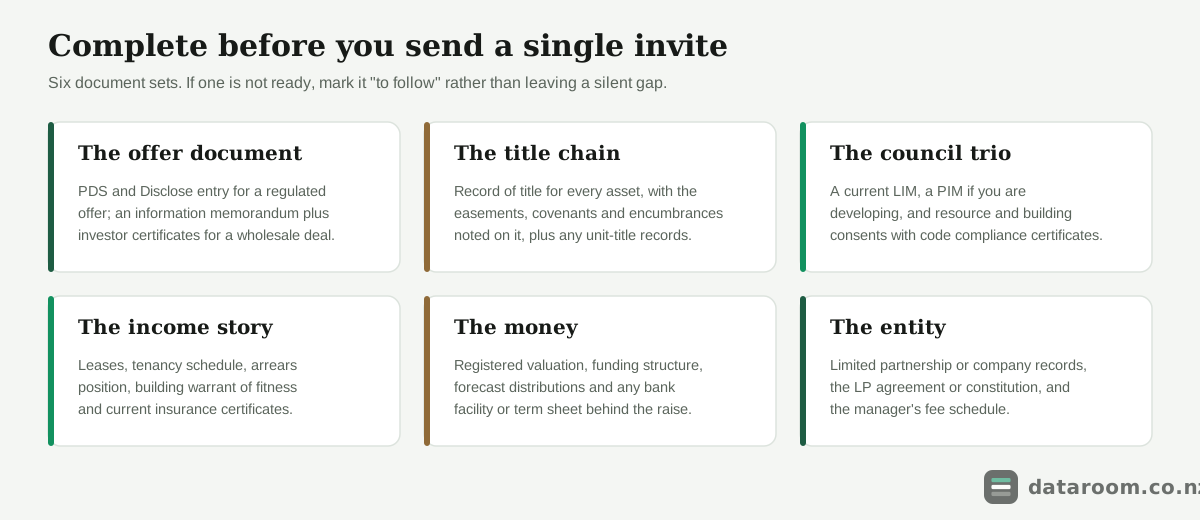
Each of those six is a folder, not a file, and each one has a group it belongs to. The rest of this guide walks them in order.
If an item is genuinely not ready, note it in the room as outstanding rather than leaving a hole a diligence lawyer finds first. Investors read an honest “to follow” line far better than a gap they discover on their own.
Who is actually reading your syndication room?
A property sale has bidders. A syndicated offer has something messier.
An investor register can run to dozens or hundreds of names. Every one is entitled to see the same core pack, and not one is entitled to see another.
That single fact shapes the whole build. The room has to hold four audiences at once without any of them tripping over each other. Get the layering right on day one and most of the awkward questions never arise.
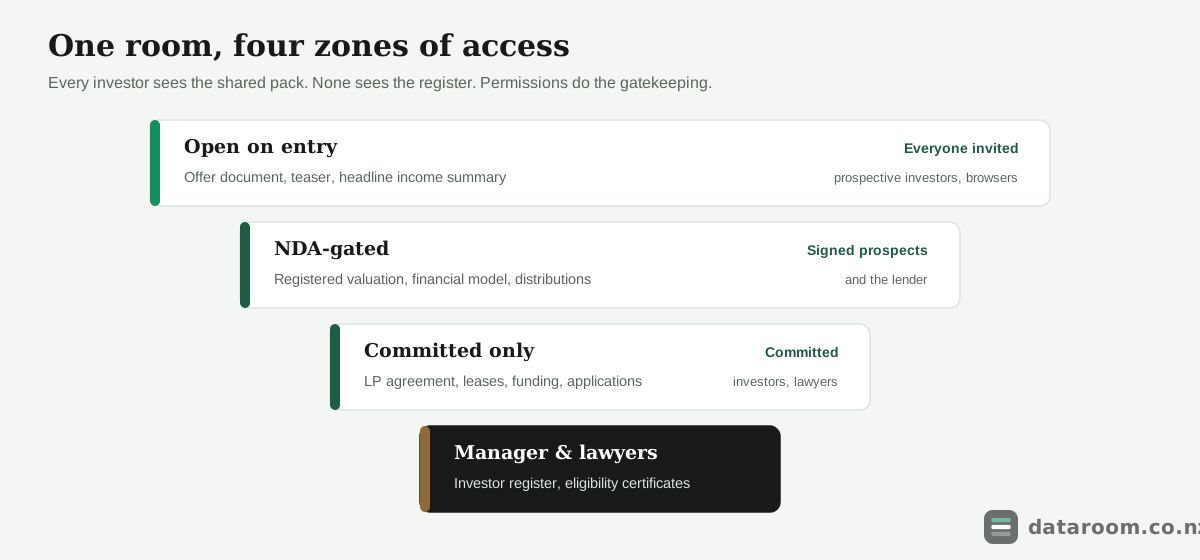
The four groups want genuinely different things, and it helps to name them plainly.
- Prospective investors need the offer document, the headline income and, once they sign an NDA, the valuation. Little else, until they commit.
- Committed investors move into the wider workspace once their application and, where relevant, their eligibility certificate are in.
- The lender or bank wants the title, the valuation, the leases and the funding structure, and has no business seeing your investor list.
- The lawyers and the manager’s own advisers touch everything and generate most of the Q&A.
Group-level permissions let all four sit in one room without any group seeing another’s workspace. That is not just tidy; it is an accountability control.
Your register holds names, contact details and often investment amounts. That is personal information you stay responsible for under the Privacy Act 2020, even while it sits inside a third-party tool. A granular permission model plus an exportable access log is how you show you controlled who saw it.
A sale room protects one transaction. A syndication room protects a hundred relationships at once, and the register is the file you least want in the open.
Which disclosure regime is your offer actually under?
This is the question that decides the shape of the whole pack, so answer it before you build a folder.
Most widely-held property syndications in New Zealand are managed investment schemes. Offering interests to the public triggers the full disclosure machinery of the Financial Markets Conduct Act 2013, overseen by the Financial Markets Authority.
That means a licensed manager, a licensed supervisor, a product disclosure statement and a register entry on the Disclose register. It is a serious build. The PDS is the document every prospective investor reads first, so it belongs at the top of the room, open on entry.
Many commercial deals never go near that regime, and land instead on an exclusion. If you are offering only to wholesale or eligible investors under Schedule 1 of the Act, you swap the PDS for an information memorandum.
That brings a different obligation: proving each investor qualifies. The proof is a certificate, and it is personal information, so it lives in the restricted register zone, never in the open workspace.
| If your offer is | The core document is | The room must also hold | Who reads it first |
|---|---|---|---|
| A regulated offer to the public | A product disclosure statement plus the Disclose register entry | The scheme's governing document and the supervisor's details | All prospective investors, on entry |
| Wholesale investors only | An information memorandum | A wholesale-investor certificate for each name | The manager and lawyers, gated |
| Eligible investors | An information memorandum | A signed eligibility certificate confirmed by an accountant or lawyer | The manager and lawyers, gated |
| A single commercial sale | A sale and purchase agreement and diligence pack | Title, LIM, leases and consents for one asset | One buyer and its advisers |
Two practical notes sit under that table. The boundary between a regulated offer and an exclusion is not a place to guess; getting it wrong is a compliance problem, not a paperwork one.
Whichever side you land on, the room should show the workings. For a regulated offer, include the Disclose register entry number so investors can verify it themselves. For an excluded offer, include the certificates that prove you stayed inside the lines.
What do unit-title and LIM documents add to the pack?
Two document sets do more damage than any other when they arrive late or thin, and both are peculiar to how New Zealand property trades.
What extra pack does a unit-title asset need?
Unit-title assets carry a second layer of diligence that catches out sellers used to freehold. A buyer is entitled to a pre-contract disclosure statement.
Beyond that, the body corporate operational rules, the long-term maintenance plan, the levies and the minutes all become material to the decision.
A remediation history buried in three-year-old body corporate minutes surfaces late and reprices a deal, so put the full body corporate record in the room from day one.
The underlying titles and unit plans are held by Land Information New Zealand, and a room that anticipates the disclosure obligations reads as competent.
How fresh does the LIM have to be?
The LIM sets the risk tone for everything else. A land information memorandum flags special land features, known contamination, drainage, consents and any council-recorded hazard, and investors and their lawyers read it early.
A stale LIM invites the quiet question of what you are not showing, so order a fresh one before the room opens.
Expect roughly $300 to $500 for a commercial LIM depending on the council, returned inside the statutory ten working days. Date-stamp it in the folder name so nobody guesses which version is current, and let version control quietly replace the old copy.
Get these two right and most of the Q&A thread never needs to happen.
How should you map documents to folders and groups?
The fastest way to lose a syndication room is to dump everything into one folder and let investors hunt.
Map each document to the group that needs it and the place it sits before you upload a single file. Build the folder tree from that map rather than the other way around.
| Document | Who needs it | Where it sits |
|---|---|---|
| PDS or information memorandum | All prospective investors | Top-level 'Start here' folder, open on entry |
| Record of title, easements, covenants | Investors, lender, lawyers | Property, then Title |
| Unit-title records, body corporate minutes and financials | Investors, lawyers | Property, then Unit title |
| LIM and PIM reports | Investors, lender | Property, then Council |
| Resource and building consents, code compliance certificates | Lender, lawyers | Property, then Consents |
| Independent valuation | Committed investors, lender | Financials, NDA-gated |
| Leases, tenancy schedule, arrears, building WoF | Investors, lender | Property, then Income |
| LP agreement or constitution, manager fee schedule | Committed investors, lawyers | Entity |
| Funding structure, distribution forecast, bank term sheet | Committed investors, lender | Financials |
| Investor register, application forms, eligibility certificates | Manager and lawyers only | Register, restricted |
Keep the register itself locked to the manager and the legal team.
Everything an investor genuinely needs in order to decide can live in the open and NDA-gated folders above it. The one sensitive file stays sealed while the rest of the room feels generous. For the end-to-end build order, our guide on how to set up a virtual data room lays out the whole sequence.
How do you stage access as the register fills?
Opening the entire room to every name at once is the reflex mistake.
It exposes the valuation and the funding structure to people who are still only browsing, and it throws away the signal that tells you who is serious. Stage it instead, and let permissions carry the load.
Stage access in five moves
Open the room in layers so browsers see the offer document and committed investors unlock the detail.
- 1
Publish the open pack
Expose the PDS or information memorandum, the headline income and a summary valuation to everyone invited. Enough to earn a commitment, not enough to hand over the whole deal.
- 2
Gate the valuation behind an NDA
Put the full registered valuation, the financial model and the distribution forecast behind a click-through NDA, so only prospects who have signed can reach them.
- 3
Group investors by commitment
Set permission groups: prospective, committed, lender, legal. Move a name up a group as it leans in, so access tracks real intent rather than the initial invite list.
- 4
Lock the register and certificates
Restrict the investor register, application forms and eligibility certificates to the manager and lawyers. Those hold personal information and no investor needs to see another's.
- 5
Turn on watermarking and the log
Apply dynamic watermarks to leak-prone files such as the valuation and leases, and keep the access log running. That log is also your Privacy Act evidence.
This staged model is only possible with per-group and per-file permissions, which is precisely what a shared drive cannot give you.
It keeps sensitive material controlled while you run several investors at different levels of commitment, and it turns the room from a passive file store into a live read on your own raise.
What does a property data room cost in New Zealand?
Property rooms stay open longer than almost any other kind, and that changes the sum.
A syndication room lives through the raise, then stays available to investors for years while they hold the asset. The ongoing-access tail is the part people forget to budget.
The figures below are indicative NZD, not quotes, and GST of 15 percent usually sits on top. Always confirm a written quote and compare the current shortlist in our main comparison table.
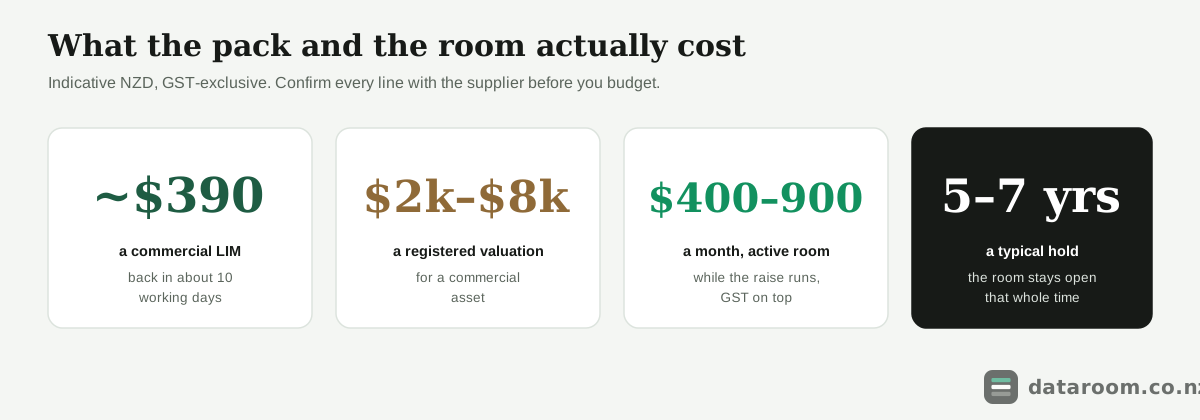
The room itself is only one line in a wider pack cost, so it helps to see them together.
| Line | Indicative NZD | Notes |
|---|---|---|
| Commercial LIM | ~$300 to $500 | Per asset, returned inside 10 working days |
| Registered valuation | ~$2,000 to $8,000+ | Scales with asset size and complexity |
| Single commercial sale room | from ~$150/mo | Flat monthly, capped users; a 14-day free trial lets you build first |
| Active syndication room | ~$400 to $900/mo | While the raise runs, with structured Q&A |
| Larger or multi-asset offer | ~$1,000 to $2,500+/mo | Across a longer window and wider register |
| Ongoing investor access | ask specifically | How the supplier prices a dormant, read-only room |
One trap is worth naming. Storage-metered pricing on a plan-heavy and imagery-heavy property deal can outrun a flat monthly rate badly over a multi-year hold.
Valuations, drone imagery and scanned consents pile up, so for most syndicators a flat figure is the safer number to plan around.
See our current pricing for a property room
A flat monthly plan, a 14-day free trial, and no per-page metering to model against a multi-year hold.
How long should the room stay open after the raise closes?
Usually for the life of the hold, and that is the answer most first-time syndicators underprice.
Once the raise closes and units are allotted, the room does not go away. It becomes the standing home for distribution notices, annual reports and the offer document investors will want to pull years later.
So it shifts from a busy transaction workspace into a quiet read-only archive. The cost model should shift with it, which is why the single most useful question to a supplier is how they price a mostly dormant room.
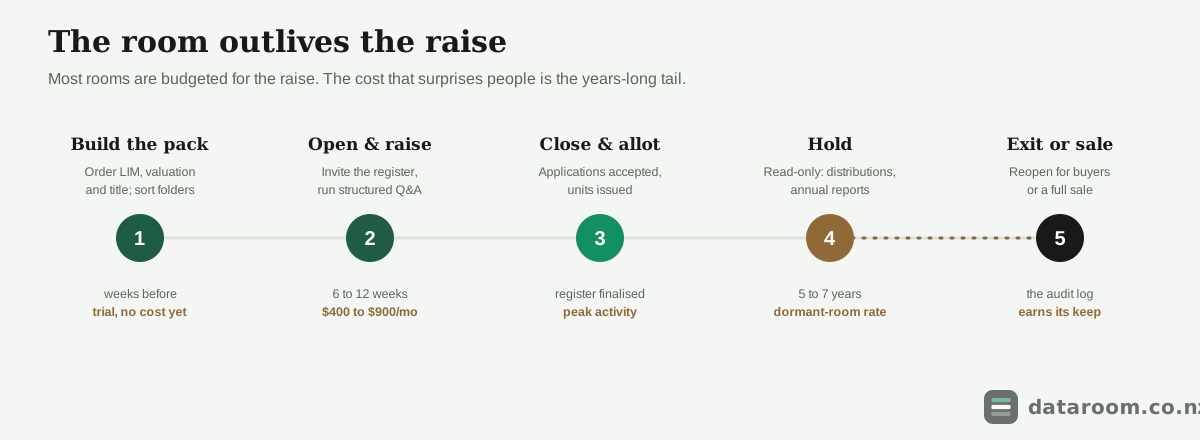
The tail matters for a reason beyond convenience. Disclosure disputes surface late, sometimes years into a hold, and a preserved audit log of who saw which version of the valuation and the LIM is worth keeping intact for exactly that moment.
When the asset finally sells, that same room reopens for the buyer’s diligence, so the record you kept clean through the quiet years becomes the head start on the exit.
Do you actually need a data room, or will a shared drive do?
For one asset and one buyer, honestly, a well-organised folder can carry a small commercial sale. A single agent-led sale still sits under the Real Estate Authority’s disclosure rules, and it behaves more like a mergers and acquisitions process than a syndication.
The moment more than one party is reading in parallel, that stops being true.
A syndication cannot run on a shared drive. The whole point is that dozens of investors see the same pack while the register stays sealed, and a shared link gives you none of the controls that make that safe.
The comparison below is the honest version, not a sales pitch: the drive wins on cost and familiarity, and loses on everything a syndication actually depends on.
| What the deal needs | Shared drive | Data room |
|---|---|---|
| Per-investor and per-group permissions | ✗ | ✓ |
| NDA gate on the valuation | ✗ | ✓ |
| Watermarking on leak-prone files | ✗ | ✓ |
| Access log for who saw what | ✗ | ✓ |
| Register sealed from investors | partial | ✓ |
| Costs almost nothing | ✓ | ✗ |
| Reads as professional to a lawyer | ✗ | ✓ |
Read that matrix as a threshold rather than a verdict. If your deal genuinely is one buyer, one asset and one adviser on each side, the drive may be proportionate and the room an over-spend.
If it is a register of investors, personal information and a valuation you do not want circulating, the room is not an indulgence; it is the cheapest control you will buy on the whole raise.
Compare data rooms for a property deal
See indicative NZD pricing, charging models and trials for every provider we track, side by side.
Common questions from NZ property syndicators
Property data room FAQ
Do I need a data room, or will a shared drive do?
For one asset and one buyer, a tidy folder can cover a small commercial sale. A syndication cannot run on a shared drive, because you need per-investor permissions, an NDA gate on the valuation, watermarking on leak-prone files and an audit log of who saw what. A shared link gives you none of those, and it reads as amateur to an investor's lawyer.
How do I stop investors seeing each other's details?
Put each investor group in its own permissioned workspace inside one room, and lock the register, application forms and eligibility certificates to the manager and legal team. Investors see the shared pack and never the list. That separation is the main reason to use a room over a drive for a syndicated offer.
What changes for a wholesale or eligible-investor offer?
You swap the product disclosure statement for an information memorandum, but you also store each investor's wholesale or eligibility certificate in the restricted register folder. Keep those out of the open workspace; they are personal information and only the manager and lawyers need them. The exclusions sit in the Financial Markets Conduct Act 2013.
How current does the LIM need to be?
Order a fresh one before the room opens. A commercial LIM runs roughly $300 to $500 depending on the council and comes back inside ten working days, and a stale one invites the question of what you are not showing. Date-stamp it in the folder name and let the room's version control replace the old copy rather than leaving both.
How long should the room stay open after the raise closes?
Usually for the life of the hold, in read-only form, so investors can pull their offer document and annual reporting. Confirm the supplier's pricing for a dormant room and its export options up front, because disclosure disputes can surface years later and a preserved audit log is worth keeping intact for exactly that moment.
We have Australian investors. Does that matter?
It is common on larger raises, and it is why ANZ business-hours support helps: a stalled login gets fixed inside your working day rather than overnight. For the capital-raising mechanics, see our property syndication guide.
Explore other use cases
A data room fits more than one kind of deal. See our other New Zealand guides.
Consumer & retail
How a virtual data room fits consumer & retail deals in New Zealand.
See the guideDue diligence
How a virtual data room fits due diligence deals in New Zealand.
See the guideFinancial institutions
How a virtual data room fits financial institutions deals in New Zealand.
See the guideHealthcare & life sciences
How a virtual data room fits healthcare & life sciences deals in New Zealand.
See the guideIndustrials
How a virtual data room fits industrials deals in New Zealand.
See the guideM&A
How a virtual data room fits m&a deals in New Zealand.
See the guideOil & gas
How a virtual data room fits oil & gas deals in New Zealand.
See the guideRenewable energy
How a virtual data room fits renewable energy deals in New Zealand.
See the guideStartup fundraising
How a virtual data room fits startup fundraising deals in New Zealand.
See the guideTechnology, media & telecom
How a virtual data room fits technology, media & telecom deals in New Zealand.
See the guide