

Virtual data rooms for an NZX listing
Before you brief a lawyer or ring a vendor, you should be able to tick off a short, blunt checklist. Each item is a decision you can make in an afternoon, and together they tell you the grade of room to shortlist:
- Classify the offer. Full Main Board IPO with a PDS, a compliance listing, or a pre-IPO wholesale round? The category, not the company’s size, sets the grade.
- Count the parties at peak week. Every team that needs a login, and the access level each one holds, from full-admin counsel to watermarked cornerstone bidders.
- Decide where verification lives. If your lawyers will run verification through the room, a generic file store will fight you the whole way.
- Ask the sponsor early. Many lead managers name an accepted enterprise platform, which quietly makes the choice for you.
- Size the term to the real timetable. A listing room runs for months; a lock-in that suits a nine-week trade sale is the wrong shape here.
- Confirm the archive exists before you sign. A sealed, exportable record cannot be retrofitted after the offer closes.
The rest of this guide takes each of those in turn, puts indicative NZD figures on the spend, and routes you to the comparison table when you are ready to name a provider. To keep it concrete, picture a Nelson aquaculture company, a green-lipped mussel exporter listing on the NZX Main Board to fund a second processing plant. It has strong export earnings, a family and iwi shareholding to broaden, and a board that has never run a public offer. The moment the mandate letters are signed, the company stops being a private business and becomes a disclosure exercise, and the room is where that exercise is proved.
Does an NZX listing actually need a virtual data room?
For a listing the honest answer is effectively yes, so the sharper question is which grade of room the offer demands. A virtual data room is a secure online space for sharing confidential documents with controlled, logged and time-limited access, and an initial public offering is a regulated disclosure event rather than a private negotiation. Under the Financial Markets Conduct Act 2013 the offer is made through a Product Disclosure Statement, and the directors and advisers who sign that document carry personal and organisational liability for what it says. People with that exposure do not run the process over email attachments and a shared drive; they need a room where access is granted per person, every view is logged, and the final state can be sealed as a permanent record. For the Nelson board, the room is what lets them show, months later, that a claim about export volumes or resource consents rested on a specific, dated source document.
How is an IPO room different from an ordinary deal room?
If your board has sold a business before, a listing will feel familiar and then, quite quickly, heavier, because three things step up at once. The first is the disclosure standard: a trade buyer negotiates protection through the sale agreement, whereas an IPO must satisfy value, risk and a public disclosure standard set by law and the NZX Listing Rules at the same time, since ordinary investors rely on the PDS rather than on their own lawyers. The second is the crowd, where an M&A process with two or three counterparties becomes a listing that invites counsel on both sides, the lead manager, the investigating accountant, a due diligence committee, cornerstone institutions and the regulator, each on a different level. The third is verification, a layer private deals simply do not have, in which every material statement in the PDS is checked against evidence and that check is recorded. Together these turn an ordinary deal room into something closer to an audited archive, which is why the M&A playbook is the closest cousin but not the same job.
What does an NZX listing data room actually hold?
The content of a listing room is broad because the diligence is broad, and it stacks in four layers you can picture at a glance. At the base sits the constitutional and corporate spine: the constitution, share register, board minutes and the resolutions authorising the offer, all of which the regulator will cross-check against the Companies Register. For the mussel exporter this layer also carries the marine farming consents and quota entitlements that underpin the entire business, so it is unusually load-bearing. Above it sits the commercial layer of material contracts, leases, intellectual property and any live or threatened litigation, and above that the financial layer of audited accounts, prospective financial information and the investigating accountant’s working papers, which need fast rendering because the models are large.
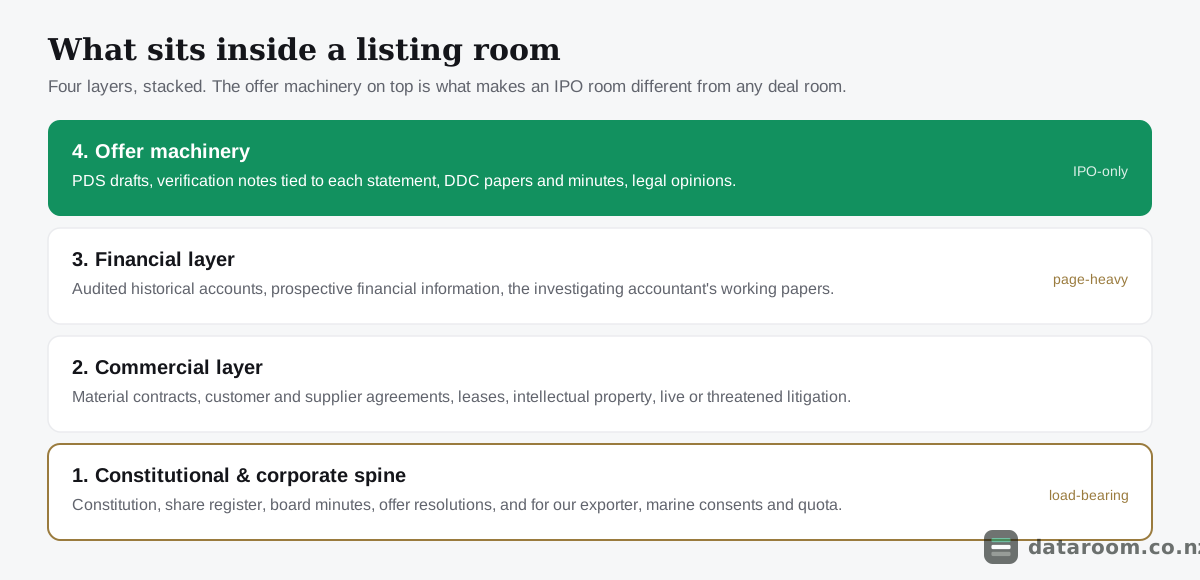
On top of all of it sits the offer machinery itself: drafts of the Product Disclosure Statement, the verification notes that support each statement in it, the due diligence committee papers and the legal opinions. This top layer is what makes an IPO room distinct, and it is exactly the material a generic folder tree handles badly. A sensible data room folder structure template is a fine starting point, but a listing needs a verification-led index layered over the top of it, and how to set up a virtual data room walks the build.
Who gets into the room, and at what access level?
An IPO invites a crowd, and the crowd does not all get the same view, because mismanaging access is one of the fastest ways to leak commercially sensitive information or, worse, to disclose something unevenly across bidders on a regulated offer. Rather than a flat list, think of access as a small number of tiers, each mapped to what that party has to do. The issuer’s directors, management and counsel sit at the top with full admin rights, since they own the disclosure and populate the room. The lead manager or sponsor holds a broad view with some upload rights, the investigating accountant works mainly inside the financial folders and the Q&A, and the legal advisers to the offer live in the legal and contract folders where they run their due diligence and draft opinions.
Two tiers carry the most risk and deserve deliberate thought before anyone is invited. The first is the cornerstone and institutional bidders, who commit early and take the largest stakes; here you want a curated, watermarked, often view-only rendering so a sensitive supply contract cannot walk out of the room as a downloaded PDF. The second is the due diligence committee, whose view must be complete enough to support their sign-off yet cleanly logged, because their reliance on the room becomes part of the liability record. NZX RegCo and the regulator, finally, get a defined, read-only view where and when it is needed. Get these tiers right early and the process stays calm; get them wrong and a leak or an uneven disclosure becomes a real problem rather than a tidiness one.
On an IPO the audit log is not a nice-to-have. It is the evidence, months later, of exactly what each party was shown and when they were shown it.
What should an NZX IPO data room cost in New Zealand?
Room cost is a small line in an IPO budget that can run into the millions once you count legal, accounting and underwriting fees, which is a reason to buy the right grade rather than the cheapest, and equally a reason not to overpay for scale a mid-sized listing will never touch. The figures below are indicative monthly NZD, GST-exclusive, for a room open across a typical listing process. Enterprise platforms almost always price per page or by quote, so your real number depends on document volume and term; treat the table as a way to sanity-check a proposal against the shape of your offer, and confirm every line with the provider.
| Listing scenario | Room grade | Indicative monthly spend (NZD) | Term to plan for |
|---|---|---|---|
| Full NZX Main Board IPO | Enterprise, per-page or quote | $2,000+ (quote-based) | 6 to 12 months |
| Compliance listing | Enterprise or upper mid-tier | $700 to $2,000 | 3 to 6 months |
| Pre-IPO institutional round | Mid-tier flat or enterprise | $350 to $1,500 | 2 to 4 months |
| Dual-track (trade sale or list) | Enterprise, kept flexible | $1,500+ (quote-based) | 6 to 12 months |
| Post-listing continuous disclosure archive | Sealed archive tier | Low monthly or included | Ongoing |
Two things move a listing quote more than the brand on the login page. The first is document volume, because enterprise platforms often meter per page and a listing is page-heavy by nature: scanned marine consents, five or more years of audited accounts, plant registers and a stack of employment files can push a mid-sized NZ issuer past several thousand pages before the offer machinery is even loaded. The second is the guest headcount at the busiest week, since cornerstone bidders and multiple advisory teams each arrive with several logins, so model both at their peak and ask the vendor in writing what happens if the page count doubles late in verification. The single biggest avoidable cost, though, is term: an IPO room genuinely runs for months, so a longer commitment can make sense here in a way it never does for a nine-week trade sale, with a dual-track process the exception that wants flexibility rather than a lock-in. Our virtual data room pricing in New Zealand guide breaks down the charging models line by line.
Compare data rooms built for a regulated offer
See certification, permissions, Q&A and indicative NZD pricing for every provider we track, side by side.
Which criteria actually decide your listing room?
Choosing a listing room comes down to a handful of criteria in rough priority order, and sticker price sits near the bottom, which surprises most first-time issuers. Security and certification lead, so at this level the room must hold recognised certification, typically ISO 27001 and SOC 2, which are not marketing badges but evidence that a third party has audited the provider’s controls; we unpack what each covers in ISO 27001, SOC 2 and VDR certifications explained. Close behind sit granular permissions and rights management, meaning per-folder, per-file and per-user control plus dynamic watermarking, view-only rendering and the ability to revoke access to a document already opened, and then audit trail depth, where every view, download, print and Q&A entry is logged, exportable and tamper-evident.
The next tier is about running the process without it stalling. Structured Q&A matters because a listing generates hundreds of diligence questions across workstreams, and you need assignment, threading and a permission model so a legal question does not surface a financial answer to the wrong party; running data room Q&A without losing control covers the workflow. Verification support, the ability to link a source document to the PDS statement it backs and keep those links auditable, is the criterion generic tools fail most often. Capacity and performance, handling bulk upload and fast rendering of large financial models, and responsive support during New Zealand business hours round out the list, because an offer timetable does not pause for time zones.
How long does the room stay open, and when does verification bite?
Verification is the part of an IPO that first-time issuers underestimate the most, and it is also the part that sets the timetable, which is why the room is open for months rather than weeks. Every material statement in the Product Disclosure Statement has to be checked against evidence, and that check has to be recorded, a job the room either supports natively or fights you on the whole way. In practice the verification team builds a set of notes, each tied to a statement in the draft PDS and each pointing to the source document that supports the claim; the due diligence committee reviews those notes before signing off the offer, and any statement that cannot be verified gets changed or removed. Done well, the room becomes a self-contained record of the claim, the evidence, the person who checked it and the timestamp. Done badly, on a generic file store with no way to link a document to the statement it backs, the team spends weeks reconstructing what supports what, and because verification gates the timetable, that delay is expensive.
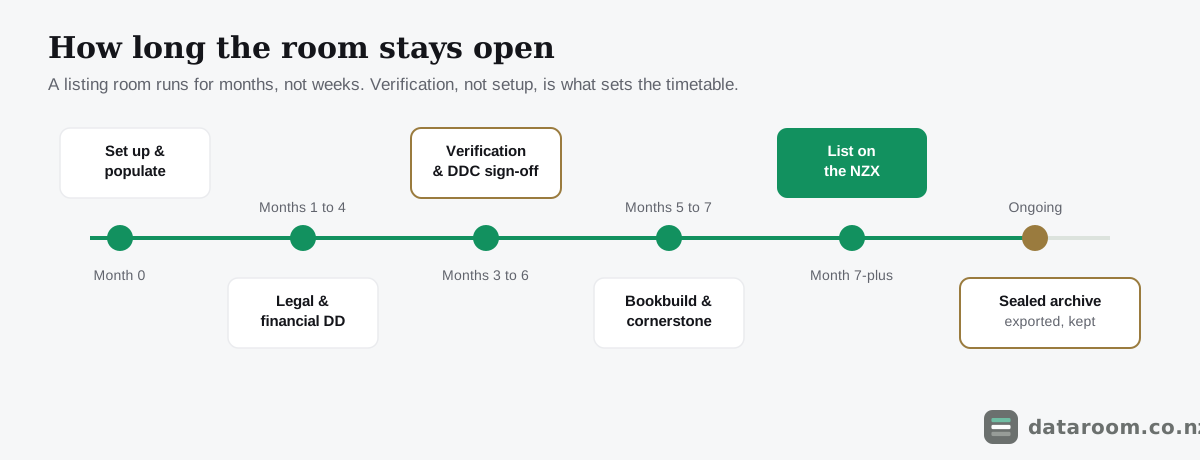
The timeline above is why the term question matters so much at the budgeting stage. The setup and legal workstreams overlap, verification and the due diligence committee sit in the middle where the schedule is most fragile, and the sealed archive keeps running long after the shares start trading. Plan the room around that whole arc, not around the quiet setup phase, because the expensive weeks are the ones in the middle. The underlying workstreams are the same ones in our due diligence checklist for New Zealand deals.
What must an IPO-grade room have, and where does the Privacy Act bite?
Two rooms at the same monthly price can offer very different protection, and the gap is rarely visible on the pricing page, so the matrix below shows what an NZX listing genuinely needs against what a general mid-market deal room typically ships. Read down the rows a mid-tier room fails: the tamper-evident audit log, verification linking, redaction and the sealed archive are precisely what someone relies on after the offer closes, which is why a plan that looks cheap because it quietly dropped one of them is a false economy.
| Capability | Mid-tier deal room | Enterprise IPO platform | Needed for an NZX listing |
|---|---|---|---|
| ISO 27001 / SOC 2 certification | ✗ | ✓ | ✓ |
| Granular per-file permissions | ✓ | ✓ | ✓ |
| Dynamic watermarking & view-only | ✓ | ✓ | ✓ |
| Tamper-evident, exportable audit log | ✗ | ✓ | ✓ |
| Structured Q&A with assignment | ✓ | ✓ | ✓ |
| Verification / disclosure linking | ✗ | ✓ | ✓ |
| Redaction tools | ✗ | ✓ | ✓ |
| Sealed post-close archive export | ✗ | ✓ | ✓ |
The quieter risk that the matrix does not capture is the Privacy Act. A listing room carries employee files, customer data and other personal information, and populating and sharing it engages the Privacy Act 2020 and its information privacy principles. The Office of the Privacy Commissioner’s guidance on the privacy principles is the sensible reference when you decide what personal information genuinely belongs in the room, how it is minimised, and how it is protected once it is there. For the fuller treatment of the security bar, including what to write into a vendor questionnaire, see virtual data room security: what to demand for a New Zealand deal.
How do you route a listing-adjacent offer to the right grade?
The checklist at the top points most Main Board offers at an enterprise platform, but not every listing-adjacent process needs one, and buying more room than the offer warrants is its own waste. A pre-IPO institutional round placed with a handful of wholesale investors under an exclusion in the Financial Markets Conduct Act 2013 does not carry the full PDS machinery, so it can often run on an upper mid-tier room with good permissions and a clean log. A compliance listing that moves an already-reporting entity onto the boards sits in the middle, lighter than a full IPO and heavier than a private raise. Government guidance on the ways businesses raise funds is a plain-English starting point, but classify the offer with your lawyers before you size the room, because the category decides the grade.
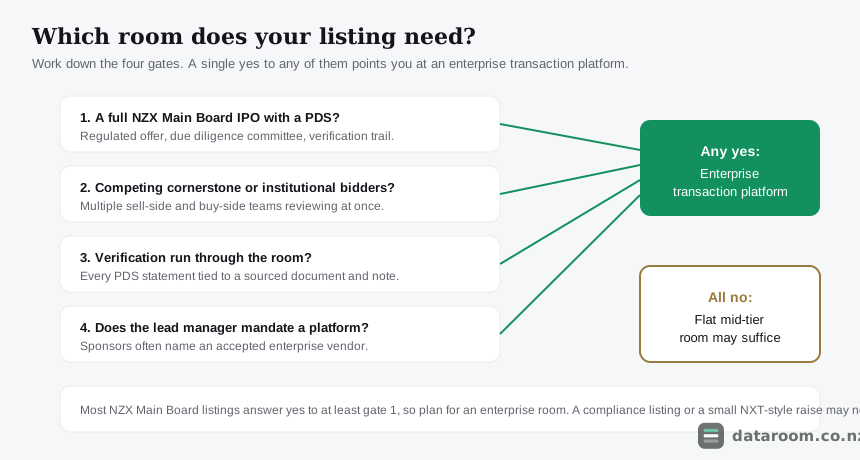
Two quiet tests keep you honest if the gates leave you unsure. First, will anyone rely on the room’s audit trail as evidence after the fact? If a due diligence committee, an auditor or a regulator will lean on the log, you are in enterprise territory regardless of deal size. Second, is verification run through the room? If yes, the generic tier cannot hold the trail cleanly. If both answers are genuinely no, a mid-tier room may be enough, and our is a virtual data room worth it and cheapest virtual data rooms for NZ small deals guides help you right-size the spend rather than defaulting to the top of the market. The through-line across all of it is discipline, not scale: clean permissions, threaded Q&A and a real audit trail are exactly what an IPO demands, only larger and with a verification layer bolted on top, so the mid-market room you run well today is rehearsal for the listing room you will need tomorrow.
See our current pricing for a long-running deal room
A predictable plan and a 14-day free trial, so you can pilot with real documents before the process starts.
NZX listing data room FAQ
Do I need an enterprise data room for an NZX IPO?
For a full Main Board IPO with a Product Disclosure Statement, effectively yes. The offer needs recognised certification, a tamper-evident audit log, verification support and a sealed archive, which flat mid-tier rooms usually lack. A compliance listing or a pre-IPO institutional round can sometimes run on an upper mid-tier room; use the checklist above to decide.
How much does an IPO data room cost in New Zealand?
Indicatively from about NZD $2,000 a month upward for an enterprise platform over a 6 to 12 month process, GST-exclusive, and almost always quote-based on document volume and term. A compliance listing may sit lower, around $700 to $2,000 a month. See our NZ pricing guide and confirm every figure with the provider.
What is verification, and why does it drive the room choice?
Verification is the process of checking every material statement in the Product Disclosure Statement against a source document and recording that check. The data room holds the evidence and logs the checking, so it needs to link documents to the statements they support and keep that trail auditable. A generic file store cannot do this cleanly, which is why a listing needs an enterprise room.
Who gets access to an IPO data room?
The issuer's directors and counsel, the lead manager or sponsor, the investigating accountant, the due diligence committee, legal advisers, cornerstone and institutional bidders, and the regulator where needed. Each holds a different access level, from full admin to watermarked, view-only access for bidders. Granular permissions are what keep those levels separate.
Does the Privacy Act 2020 apply to a listing data room?
Yes. A listing room typically holds employee files, customer data and other personal information, and sharing it engages the Privacy Act 2020's information privacy principles. Decide deliberately what personal information belongs in the room, restrict it, and see our Privacy Act guide for the obligations.
Should I keep a data room after the listing completes?
Yes, as a sealed archive. Export a tamper-evident record of the whole process, including who saw what and when, for the company's files and any future regulatory query. Confirm the archive export exists before you sign, because retrofitting it after the fact is not possible.